
What very hard water means for a La Mesa home
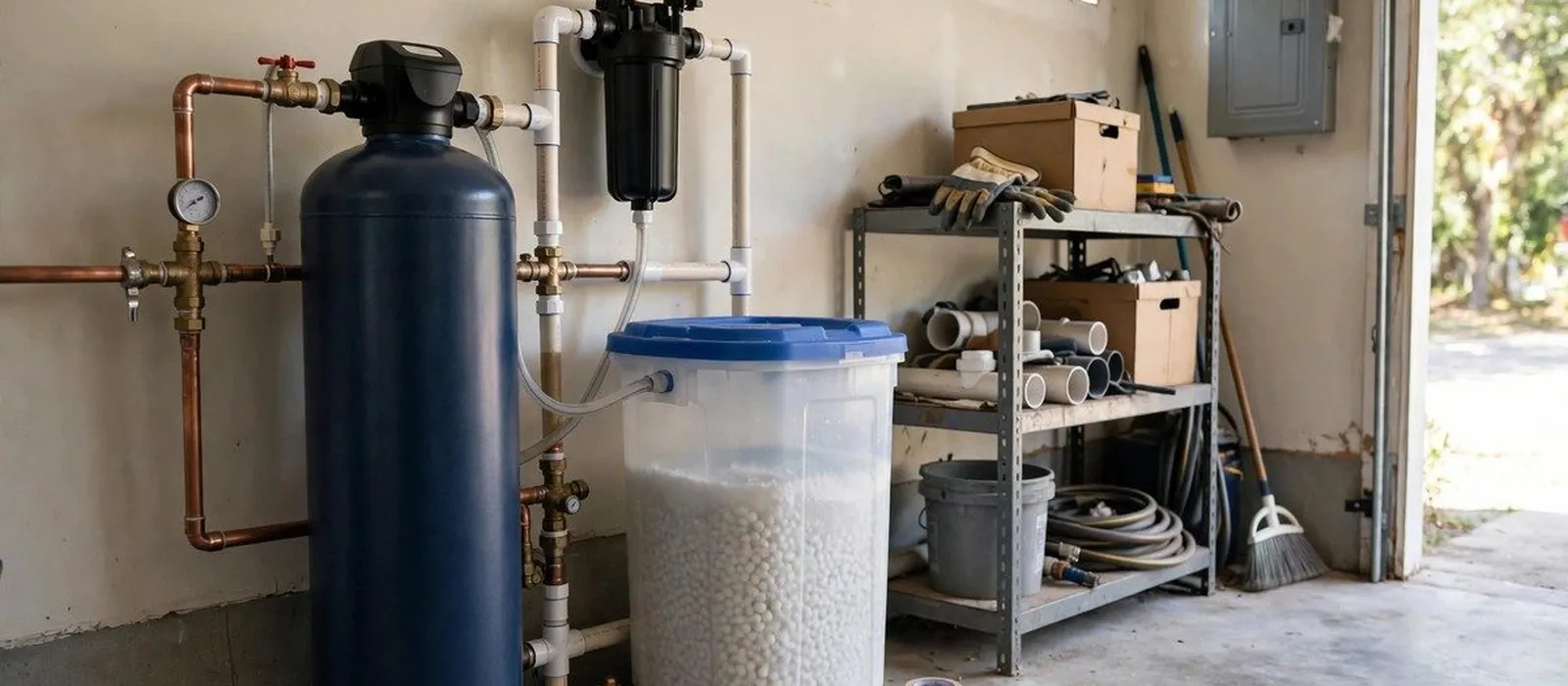
A water softener is a tank of resin beads that swap calcium and magnesium in your water for sodium or potassium, which stops those minerals from forming scale. Water softener installation in La Mesa, CA starts with the number that matters, and Helix Water District gave it in its 2025 report: an average of 206 mg/L as calcium carbonate, or 12.0 grains per gallon.
Helix's reported range ran from 9.1 to 14.6 grains per gallon, and the common scale calls anything above 180 mg/L very hard. That means white crust on shower doors, a tank heater that fills with sediment, and spotty dishes. Blends can vary by street, so test your own tap with a hardness kit or ask Helix before you size a system.
Helix also reported that it disinfects with chloramines. A softener does not remove them, so if taste or smell is your concern, you need a different tool, which this page covers below.
Softener, filter, reverse osmosis or scale preventer
These are four different devices that solve different problems. Many homes need one, and some need two.
| Option | What it does | What it does not do |
|---|---|---|
| Salt-based softener | Removes hardness minerals from every tap. | Does not filter chlorine, chloramine, lead or bacteria. |
| Carbon filter | Reduces taste, odor and some chemicals. | Does not remove hardness. |
| Reverse osmosis | Filters drinking water at one tap down to very small particles. | Too slow for whole-house use, and wastes some water. |
| Scale preventer | Changes how minerals form crystals. | Does not remove hardness, so results vary. |
| Whole-house sediment filter. | Catches sand and rust particles. | Does not soften or remove dissolved minerals. |
Softening does not purify water. If you want cleaner drinking water, add a carbon filter or reverse osmosis at the kitchen tap.
How to size a softener for your household
Measure the hardness
Use Helix's reported 12.0 grains per gallon as a starting point, then test your own tap.
Estimate daily use
Count people and multiply by about 75 gallons each per day. A family of four lands near 300 gallons.
Multiply to grains per day
Gallons times hardness gives grains. For 300 gallons at 12 grains, that is about 3,600 grains per day.
Pick a regeneration interval
Over a week that is about 25,000 grains. A 32,000-grain unit gives some margin, so it can regenerate every week or so.
Check the space
A softener needs a drain, a power outlet, a bypass valve, room for a brine tank and access for salt.
Need water softener and filtration in La Mesa?
Call the line and describe what you see. A dispatcher takes it from there.
Sodium or potassium: which regenerant
The resin works the same way with either. The choice comes down to taste, diet and budget.
Salt (sodium chloride)
- Widely sold and easy to find.
- Lower cost per bag.
- Adds a small amount of sodium to softened water.
- Fine for most households.
Potassium chloride
- Replaces sodium with potassium.
- Better for low-sodium diets, if your doctor advises it.
- Costs more and may dissolve more slowly.
- Check that your unit is rated for it.
What softened water does for tank and tankless heaters
Scale insulates the bottom of a tank, so the burner runs longer to heat the water above it. Sediment also rattles and pops as it traps steam bubbles. Softened water slows that build-up, so the heater runs more quietly and the elements stay cleaner.
A tankless unit has narrow passages that scale clogs easily. It is the type of heater most sensitive to hardness, and manufacturers often recommend regular descaling. If you are planning a tankless water heater, a softener ahead of it protects the heat exchanger, and your manual may specify a hardness limit.
Faucet aerators, cartridges and showerheads clog less often too. If you have already seen spotty chrome and slow flow, fixture repairs tend to come back until the hardness is treated.
How a softener cleans itself
When the resin is saturated with hardness, the control valve starts a regeneration cycle. It backwashes the bed, draws strong brine from the salt tank through the resin, rinses the brine out, and refills the brine tank. The drain line sends the wastewater out, usually to a standpipe or floor drain with an air gap.
Timers regenerate on a schedule, while meter-based valves count gallons and regenerate only when needed. Meter valves waste less salt and water, so we prefer them for households with changing schedules. Run a faucet for a minute after a cycle if you notice a salty taste, and tell us if it persists.
Servicing a failing softener
If your softener is old or working poorly, one of these is usually the cause. We repair many brands, and we tell you honestly if the unit is past saving.
Error codes or a blank screen
Controllers fail from power surges, dead backup batteries, or loose turbine sensors. We read the code and test the board and motor before replacing anything.
Salt mushing
A sludge at the bottom of the brine tank blocks the brine well. We pump the tank, clean it, and replace the grid if damaged.
Salt bridging
A hard crust forms above an empty cavity. The salt looks full, but it is not dissolving. Break the crust and check the humidity and salt type.
Exhausted resin
Resin that has aged or been hit with chlorine loses capacity. If hardness appears at the tap right after regeneration, the beads may be done.
Clogged injector
A tiny nozzle draws the brine. Sand or iron deposits block it, and the softener never refreshes.
Water conditioner repair on older units
Many homes have an older water conditioner that was installed before the current owner arrived, or one that got damaged during a remodel when a drain or brine line was cut. We service these units, replace broken valves and lines, and tell you if a new softener would cost less than another repair.
What goes into the price of a softener job
Softener work varies a lot with the equipment and the house. You get a clear price before work starts, based on the following.
System size
Grain capacity, resin volume and tank size set the equipment cost.
Installation location
A garage with a drain is simple. An interior closet with no drain nearby needs more piping.
Add-on filtration
Carbon filters, sediment filters and reverse osmosis units are separate equipment and labor.
Existing plumbing
Corroded galvanized lines or old shutoffs may need replacement before the new unit goes in. See installing new plumbing for related work.
Repair versus replace
A valve rebuild or injector cleaning is smaller than a new unit. We compare both.
Homeowner policies generally do not cover water treatment equipment as an upgrade. If a failed unit floods a garage, ask your insurer whether sudden water damage is covered.
Want your real number? Call (619) 927-0312
Call (619) 927-0312Water Softener and Filtration questions answered
No. A softener removes hardness minerals and does nothing about contaminants. If you want drinking water filtered, add a carbon filter or reverse osmosis unit at the kitchen tap. Helix publishes an annual water quality report you can read.
Use a test kit from a hardware store or ask Helix. The 12.0 grain average is across the system, and your street may run higher or lower. Test cold water straight from the tap before any other treatment.
Check the brine tank once a month and keep it at least a quarter full. Bridging often shows up in humid garages, so poke the salt with a broom handle from time to time.
Sometimes, with permission. Placement and drain access matter, so check with your landlord or association first. Call us with the layout and we can discuss options.
It is not mandatory, but very hard water scales tankless units quickly. Without a softener, plan for a descaling flush each year, or more often when the unit shows error codes.
Yes, including El Cajon and nearby Helix areas. Call with your ZIP code and the model of any existing unit.
Softener work is planned, so we schedule it during the day. If a leak or flood comes from a unit, shut its bypass valve and call our emergency line.
Standards and sources
Helix Water District reported an average hardness of 206 mg/L, or 12.0 grains per gallon, for 2025. On the common USGS scale, anything over 180 mg/L is very hard. Blends can vary by street, so test your own tap or ask Helix about your address.
Softeners and filters connect to your supply under the California Plumbing Code, based on the Uniform Plumbing Code (UPC). Ask which standard the equipment is certified to before you buy.
Water Softener and Filtration beyond La Mesa
The same dispatch line covers neighboring towns. Pick yours to see local notes.