
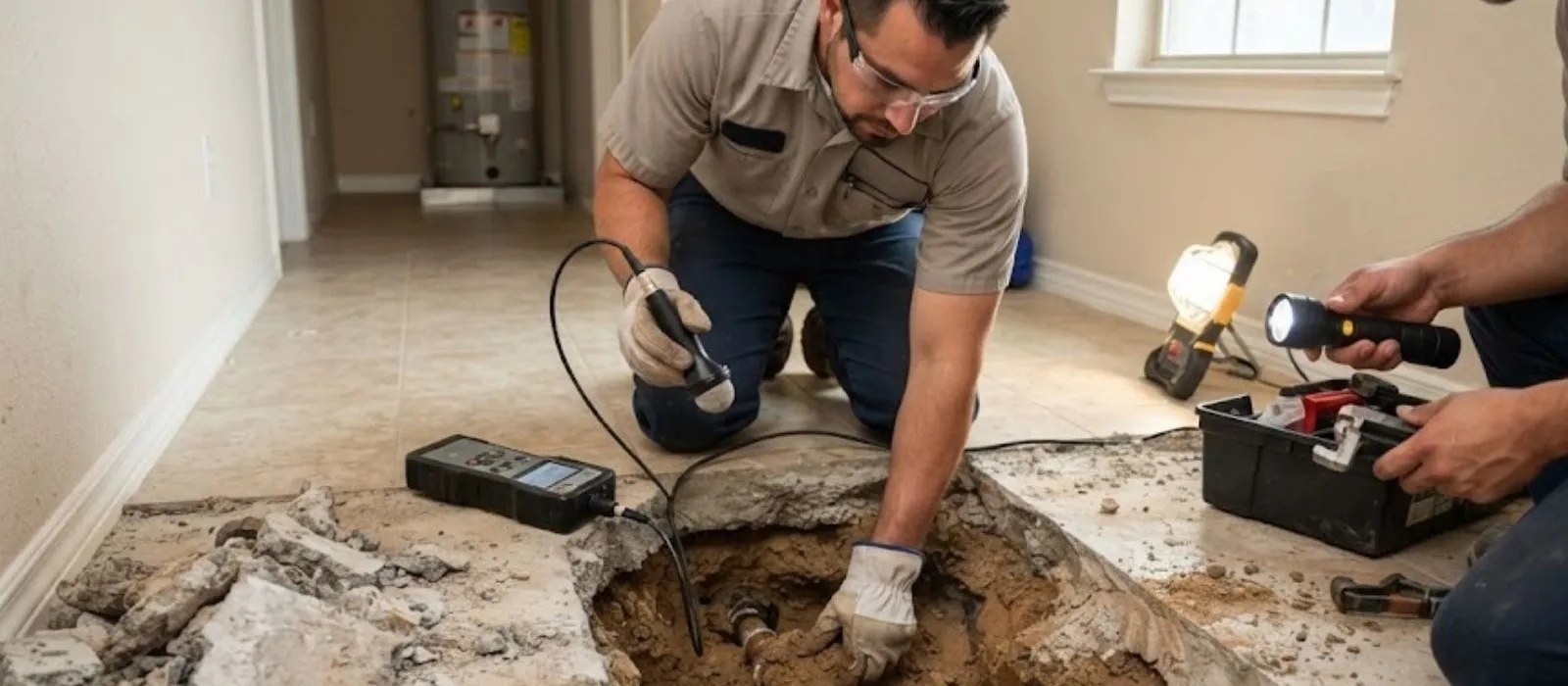
A slab leak is a pressurized pipe leaking under your floor
A slab leak is a leak in a water supply pipe that runs beneath or inside a home's concrete foundation slab. If water is surfacing through your floor in La Mesa, CA, call our 24/7 line, and a licensed plumber will help you through the first steps. Because these pipes hold constant pressure, they keep leaking until someone stops them.
Slab-on-grade homes often route hot and cold lines under the floor, then up into walls at each fixture. The escaping water finds the easiest path through the gravel bed. It may soak the floor right above the pipe, or travel and surface at a door threshold, a crack or the garage edge. That is why the wet spot and the leak are often several feet apart.
Water is coming up through the floor tonight
Water rising beneath flooring will not slow down by itself, and a 24/7 plumber is on the line at night and on weekends. Cut the supply first, then protect the floor and the outlets while we sort out the location.
- Shut the main valve on your house plumbing, usually near the front hose bib or inside the garage.
- Switch off breakers for outlets and appliances along the wet floor.
- If the leak looks like a hot line, set the water heater to pilot or turn off its breaker.
- Lift rugs and pull furniture off the wet area, then run fans if you have them.
- Do not chip or drill into the floor to look for the pipe, because you could hit another line or a wire.
- Take dated photos and a meter reading for your insurer.
Five signs that the water is under the slab
A warm spot on the floor
A leaking hot line heats the concrete above it. Bare feet find it before any tool does.
Running water you can hear
With all fixtures off, a faint hiss or rushing sound from the floor means a pressurized pipe is losing water.
Damp carpet or lifting flooring
Baseboards that darken, carpet that stays wet or planks that cup and buckle point to moisture rising from below.
A high water bill with no reason
A meter that keeps turning with every fixture closed is the easiest symptom to confirm. The step-by-step test is on our general leak page.
Weak pressure or slow hot water
Water lost under the floor means less reaches the faucets. Hot water that takes longer to arrive suggests the hot line.
Need slab leak repair in La Mesa?
Call the line and describe what you see. A dispatcher takes it from there.
Sunny rooms get warm floors in summer, and La Mesa summer highs average 78 to 92 F. A spot that stays warm in a shaded hallway after dark, or in the cooler months, tells you far more.
How the line is pinned down before concrete is touched
Isolate the system
We close the main, read the meter and test hot and cold sides separately to learn which line is losing water.
Listen along the floor
A ground microphone picks up the hiss of a leak. The sound grows louder as the sensor nears the pipe, and we mark the peak.
Trace and image
An electronic pipe locator maps where the line runs under the slab. A thermal camera or moisture meter helps confirm a wet or warm area.
Pressure test the suspect line
Capping the line and watching a gauge confirms the leak is on that run and not a different one.
Mark it and explain the choices
You see the marks on the floor and hear the options before any concrete is broken.
Three ways to fix a leaking line under the floor
| Option | How it works | Fits best when | Trade-off |
|---|---|---|---|
| Spot repair | Break a small section of slab, cut out the bad pipe, splice a new piece and patch the concrete. | One clear leak and open access. | Flooring above is cut and patched. |
| Overhead reroute | Abandon the leaking run and install a new line through the attic or walls. | The same run keeps failing or sits under cabinets. | Drywall access holes in the walls. |
| Repipe | Replace most or all supply lines with new pipe. | Several leaks or worn pipe throughout. | Biggest project, longest disruption. |
For a single leak, a spot repair is the lowest-disruption fix. If a second leak shows up on the same run, rerouting begins to make more sense. A repeat pattern across the house is when a whole-house repipe deserves a real look.
Water at the garage edge or along the foundation
Callers often notice trouble where the garage slab meets the house. Water follows the gap between slabs, so it can appear at a seam far from the pipe. Wet soil outside along the foundation can come from the same under-slab line, a sprinkler leak or roof runoff.
Run the meter test first. If the meter moves with sprinklers off, a supply line is the suspect. If your tank sits in the garage, check the heater connections and the tank itself too, because those leaks are above ground and cheaper to fix than a concrete job.
A long-running leak can wash fine soil from under the slab and leave a void. If you see new cracks in the floor or a door that has begun to stick, mention it when you call so we can plan with that in mind.
What wears out pipes beneath the slab
Copper under concrete can corrode from the outside where it touches the slab or wet soil. It can also rub against rock and gravel as the house moves with temperature swings. Constant pressure on the line speeds up wear at any thin spot.
We open the pipe or inspect a cut sample to see how it failed. Pinholes along a long stretch say the whole run is aging, so a reroute wins. A single failed joint says a spot repair will hold. That finding drives which of the three options we recommend.
What to expect at home: spot repair versus reroute
Spot repair under the slab
- Dust and noise from breaking a patch of concrete.
- Floor covering removed above the leak.
- Water is off to the house for part of the work.
- Patch is visible in the floor afterward.
Overhead reroute
- No concrete is broken.
- Small access holes cut in drywall along the new run.
- Walls need patching and paint.
- Old line is capped and left in the ground.
Papering the claim before the concrete comes up
If you plan to file with your insurer, tell them before concrete is broken. Ask whether the adjuster wants to see the leak first and whether your policy pays for access costs. Coverage varies a great deal from policy to policy.
Keep dated photos of every damaged area, the meter readings from your test and the written location finding. Keep the removed pipe section if you can. Ask for an itemized invoice that separates the leak repair, the concrete work and the flooring, since insurers often treat those lines differently.
What decides the final number on a slab leak
We give you a written price before work begins. These are the things that change it.
Where the pipe sits
A line under an open hallway is simpler than one beneath a kitchen island.
Which option you choose
Spot repair, reroute and repipe differ widely in labor and materials.
Pipe length and number of leaks
One failed joint is a smaller job than a run with pinholes throughout.
Floor finish to remove and restore
Tile, hardwood and carpet each take different effort to lift and replace.
Concrete patch and cleanup
Breaking, patching and hauling debris are part of any spot repair.
Homeowner policies often cover sudden and accidental water damage but often not gradual leaks or wear. Ask your insurer what applies to slab leaks before work starts.
Want your real number? Call (619) 927-0312
Call (619) 927-0312Slab Leak Repair questions answered
Yes. Our emergency line runs 24/7. If water is surfacing on the floor, shut the main valve, switch off power to the wet area and call (619) 927-0312. We can start locating the line the same day when an appointment is available.
A warm floor spot, a sound of rushing water from the floor and damp flooring far from any wall all point to the slab. A wall leak usually shows as a stain or soft drywall at the wall. A listening test and a pressure test settle the question.
Yes, by rerouting. The leaking line is capped and a new one is run through the attic or walls to the fixtures. It trades concrete work for drywall access holes, and it is a good fit when one run keeps failing.
A leak that runs for a long time can wash soil from beneath the slab. New floor cracks or doors that begin to stick are signs worth reporting. If you see them, a structural professional can judge the foundation itself.
It depends on the depth of the pipe, the floor finish and whether the concrete needs time to cure. We cover the schedule in the written plan so you know what to expect before we begin.
Possibly. Policies tend to cover sudden and accidental damage and often exclude gradual leaks. Ask your insurer before concrete is opened, and keep photos, meter readings and an itemized invoice.
Yes. Landlords and tenants should both know where the main valve is. We coordinate access with the tenant and give the landlord a written finding for the records. The same service covers owners in nearby El Cajon.
Standards and sources
Pipes under a slab are covered by the California Plumbing Code, which is based on the Uniform Plumbing Code (UPC). Repair choices include a spot repair through the slab, a reroute through the attic or walls, and a repipe.
Check your homeowner's policy wording and call your insurer before work begins. Photos and a written finding from the leak locating step help a claim.
Slab Leak Repair beyond La Mesa
The same dispatch line covers neighboring towns. Pick yours to see local notes.