
What drain cleaning means for a La Mesa home
Drain cleaning is the work of removing whatever narrows or blocks a drain pipe so wastewater can leave the house again. If water is rising in a sink, tub or floor drain in La Mesa, CA, our 24/7 emergency line at (619) 927-0312 reaches a licensed plumber. While you wait, stop running water and keep the washer and dishwasher off.
Most clogs sit in one of three places. A fixture trap catches hair or food scraps. A branch line serving one bathroom or the kitchen collects grease and soap film. The main drain carries everything out of the house, so it fails last and fails all at once.
The first job on any call is finding out which of those places is blocked. That decides the tool, the time and the price. A cable that works on a trap is the wrong answer for a main line packed with roots.
Washer backup or every drain in the house stopped at once
When the washer drains into the tub or several fixtures gurgle together, the blockage is usually in the main drain and not in one sink. The water has nowhere to go, so it finds the lowest opening in the house. We take these calls at night and on weekends, and same-day appointments are offered when a crew is open.
Every minute of added water makes the cleanup bigger. Do the steps below first and then call, so you can describe exactly what is happening.
- Stop the washing machine and dishwasher right away.
- Do not flush toilets until the line is cleared.
- Pull rugs and cardboard away from the lowest floor drain or tub.
- Skip chemical drain openers on a line that is backing up, because they sit in standing water and burn skin.
- Note which fixtures are slow and which are fully stopped, then tell the dispatcher.
- Keep children and pets out of any room with standing water.
Slow, gurgling or backing up: what each sign points to
The pattern matters more than the single clog. Two fixtures that fail together tell a different story than one sink that drains badly.
One slow fixture
Usually hair, soap film or food in the trap or a short branch. A hand auger or small cable often finishes it.
Gurgling after a flush
Air is being pulled past a partial blockage. If two fixtures gurgle together, suspect the shared line.
Washer standpipe overflowing
Lint and detergent residue narrow the laundry branch, and the pump discharges faster than the pipe can carry.
Several fixtures at once
A tub, toilet and sink that are slow on the same level share one line, so the problem is that line.
Bubbling floor drain
A basement or garage drain that burps when upstairs fixtures run is often the first place a main-line stoppage shows.
Sewer smell at a dead drain
Standing wastewater in the pipe produces the odor, and it means the line is holding water instead of moving it.
Need drain cleaning in La Mesa?
Call the line and describe what you see. A dispatcher takes it from there.
Kitchen sink clogs, with or without a disposal
Kitchen sinks clog differently from bathrooms. Cooking fat cools inside the pipe, coats the walls and catches rice, coffee grounds and eggshell until only a thin channel is left. That is why a kitchen drain slows for weeks and then stops in one evening.
A double sink that fills one side while the other drains tells us the blockage sits past the point where the bowls join. A kitchen sink that backs up into the laundry sink points the same way. If a disposal is attached, we pull the trap and check the unit is not packed, and a unit that hums or leaks may need a disposal repair under the sink afterward.
Until a plumber arrives, run no water into a stopped kitchen sink and leave the disposal off. Scoop standing water into a bucket if it is near the rim. Hot tap water poured down a greasy line only moves the fat further along, where it hardens again.
Unclogging a drain that will not clear on its own
A plunger and a bottle of drain cleaner are what most people try first. A plunger helps on a toilet or a sink with a simple trap clog. Drain chemicals rarely open a line that is fully stopped, and they leave caustic water sitting where a plumber then has to work.
We start at the closest cleanout or fixture and work down the line. A cable that meets a soft stop has usually found grease or paper. A hard stop may be a root mass, a dropped object or a joint that has shifted. That one detail often tells us more than guessing from the symptoms.
When the same drain clogs every few months, clearing it again is not the answer. Where grease and scale are the cause, a high-pressure water jet that scours the pipe wall cleans far better than a cable. Where the cause is a sag or a root entry, a camera look comes first.
How drain snaking and cabling works
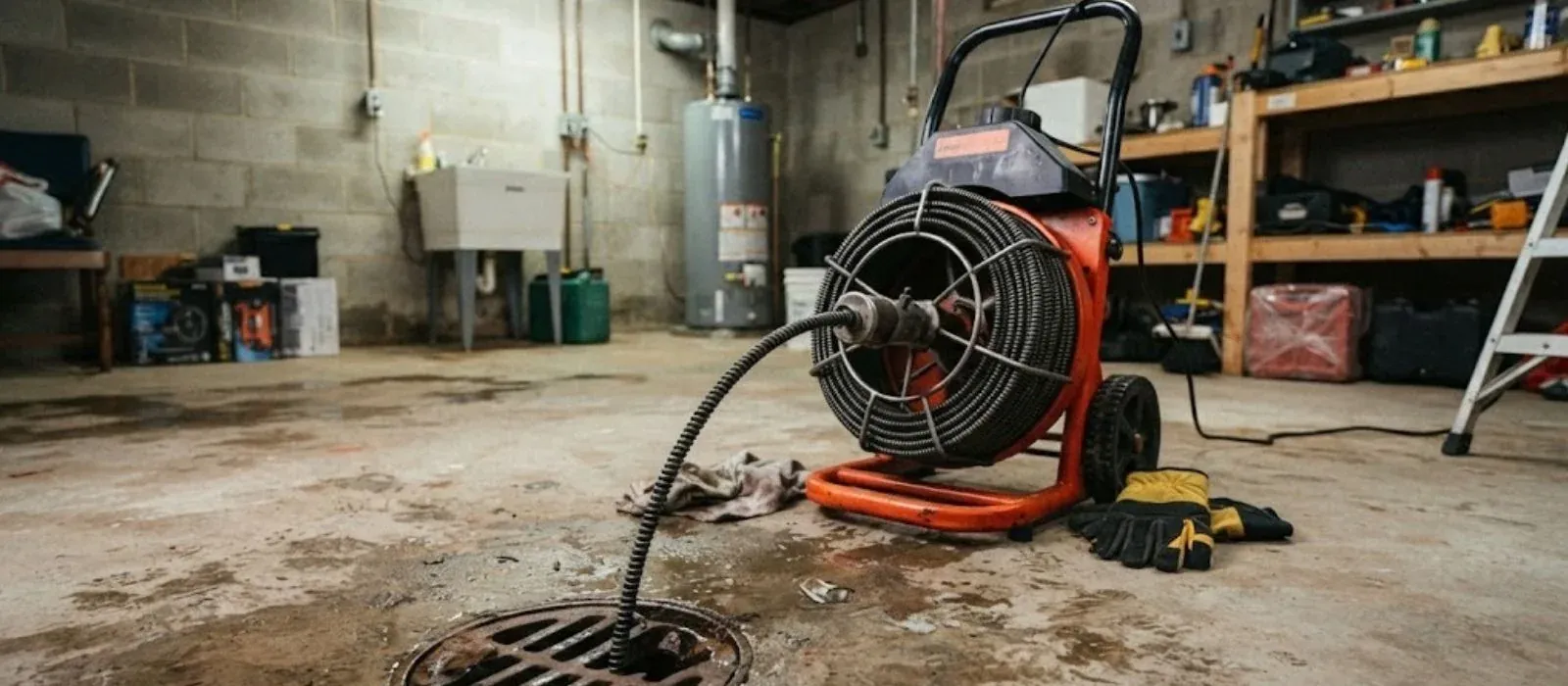
A drain snake is a flexible steel cable on a drum, turned by hand or by a motor. The head spins into the clog and either breaks it up or hooks it so it can be pulled out. Small hand augers suit sinks and tubs. Machine cables with changeable heads reach well past 50 feet into a main drain.
Cable size matters. A thin cable bends easily through a trap but can bore a narrow hole in a clog and leave most of it behind. A thicker cable with a cutting head opens the full diameter of a four-inch line. The wrong size is a common reason a drain clears for a week and then closes again.
Snaking has limits. It pushes a hole through grease instead of scrubbing it away, and it does little for a pipe that is cracked or sagging. If the cable stalls at the same distance every time, that distance is a clue, and we will tell you what we think sits at that spot.
Snake, hydro jet or camera: how the choice gets made
No single tool fits every clog. This table shows how a plumber matches the method to what the line is doing.
| Method | Best for | Limits | Usual trigger |
|---|---|---|---|
| Hand auger | Sink, tub and shower traps and short branches. | Pokes a hole through heavy grease. | One slow fixture. |
| Machine cable | Hair, paper, soft roots and first-time main stoppages. | Leaves a film on pipe walls and can stall at a bend. | Several fixtures slow. |
| Hydro jet | Grease, scale, sand and repeat clogs. | Not for fragile pipe, so a camera check comes first. | A snaked line that clogs again. |
| Drain camera | Finding the cause and the exact spot. | Shows the problem but does not clear it. | Cable stops at the same distance. |
We often combine them. The cable opens the line, the camera looks, and jetting cleans the pipe if it is sound. For lines past the house wall, see cleaning the main sewer line from the cleanout.
Tub and shower drains, and drain lines that leak
Shower and tub drains clog with hair bound in soap scum just below the strainer. Pull the stopper or cover, lift out what you can see with a plastic barbed strip, and flush with hot water. If the tub fills while you shower or the neighboring sink gurgles, the blockage is deeper and needs a cable.
A leaking drain line is a different problem from a clog. Look for a stain on the ceiling under a bathroom, damp drywall behind a toilet or a wet crawl space below a tub. Drain leaks only appear when a fixture is used, so run one fixture at a time and note which one makes the stain grow. If the leak is hidden, a leak that is hidden in a wall or ceiling can be traced without opening everything.
Yard and area drains before the November to March rains
La Mesa gets about 13 inches of rain a year, and most of it falls from November through March. Yard drains, patio drains and driveway catch basins sit idle for months and then carry a lot of water in a few storms. Leaves, mulch and silt settle in them all summer, so check them in October.
Lift the grate and scoop out debris by hand. Pour in a bucket of water and watch whether it leaves at a steady pace. If it pools, the pipe leading away is partly blocked, and we can cable or jet that run. A clear drain keeps water from standing against a foundation or a garage slab. We do the same work next door in Lemon Grove.
What happens when the plumber gets to your drain
Find the blockage
We ask which fixtures are slow, then test them one at a time. Tubs, toilets and floor drains show whether the trouble sits at the fixture, the branch or the main.
Open the line
A cable goes in at the nearest access, whether that is a cleanout, a pulled trap or a roof vent. We match cable size to pipe size so the opening is full width.
Look if it matters
If the cable hits something solid or the clog keeps returning, a camera shows roots, a break or a sag, and you decide with the picture in front of you.
Check the flow
We run water through every fixture that was affected and watch that it carries steadily. Any added work such as jetting or repair gets a clear price before it starts.
What decides the price of a drain job
No honest number exists until someone knows which drain is blocked and how far the blockage sits. You get a clear price before work starts, and you can say no.
Which line is blocked
A single trap costs less time than a main drain that serves the whole house.
Access
A cleanout makes the job short. If we must pull a toilet or reach through a roof vent, labor goes up.
Method needed
A hand auger, a machine cable, a camera pass and a jetting run each take different equipment and time.
Cause of the clog
Soft paper clears quickly. Roots, grease buildup or a collapsed section take more work and may lead to repair.
Time of the call
Nights, weekends and holidays are staffed differently from a weekday appointment, and the price reflects that.
Homeowner policies often cover sudden and accidental water damage but often not gradual leaks or wear. A plain clog is usually treated as maintenance, so ask your insurer before you file anything.
Want your real number? Call (619) 927-0312
Call (619) 927-0312Wipe greasy pans with a paper towel and bin it before washing. Put a strainer in every sink basin. Those two habits prevent most kitchen branch clogs.
Drain Cleaning questions answered
Yes. Our emergency line runs 24/7 and a licensed plumber can be sent after hours when a backup is spreading. Same-day appointments are offered when available for slower drains. Call (619) 927-0312, tell us which fixtures are affected, and we will explain what to do while you wait.
A cable punches a hole through a clog but may leave the grease or roots on the pipe wall. That coating catches new debris quickly. A camera look and a jetting pass remove the buildup, or show that the pipe has a sag or break that keeps trapping waste.
We advise against it. Chemicals rarely open a fully stopped line, and they leave harsh liquid in the pipe and in the trap we may have to open. If you already poured some, tell the plumber so gloves and eye protection are used.
If every fixture is slow and the cleanout outside shows standing water, the blockage is likely past the house wall. Ask the City of La Mesa which part of the line is public. We can clear the part on your property and tell you what we found.
Usually not for a first clog. If the kitchen drain has stopped three or four times, or the cable keeps stalling at the same point, a camera is worth the extra step because it shows whether grease, a bellied pipe or a bad joint is the cause.
Yes. Yard drains, patio drains and driveway catch basins can be cabled or jetted before the wet months of November through March. Pour a bucket of water into each one first. If it pools or drains slowly, that line needs attention before the first storm.
Standards and sources
Drain and trap work in California falls under the California Plumbing Code, which is based on the Uniform Plumbing Code (UPC) from IAPMO. Traps and vents are standard parts of a drain system under that code, and a stoppage can sit in the trap, the branch or the main.
Before you use any chemical opener, read the product label and the fixture maker's guidance. Many labels warn against using them on a fully blocked drain or near standing water, and a plumber then has to work around the chemicals.
Drain Cleaning beyond La Mesa
The same dispatch line covers neighboring towns. Pick yours to see local notes.