
Garbage disposal repair and installation in La Mesa, CA
A garbage disposal is a small motor under the sink. It spins a plate with two lugs that push food scraps against a grind ring until they are small enough to flush away. When it jams, leaks or dies, the sink fills and the kitchen is out of action, so our 24/7 emergency line takes disposal calls any hour.
Most disposal failures fall into three groups. A jam locks the motor, a leak lets water out of the housing, or the electrical side fails. The right repair depends on which group you are in, and the symptoms are easy to tell apart once you know where to look.
If your unit is more than about eight to twelve years old and leaks from the body, replacement beats repair. Everything else is worth a diagnosis first.
Symptom, cause and fix at a glance
Start with what you hear, see and smell.
| Symptom | Likely cause | Fix |
|---|---|---|
| Loud hum, nothing spins. | Jammed flywheel from a bone, utensil or fruit pit. | Power off, turn with a hex key, clear the object, press reset. |
| Silent when switched on. | Tripped reset button or dead outlet. | Press the red reset under the unit, check the breaker. |
| Water drips from the bottom. | Cracked housing or failed seal. | Replace the unit. |
| Leak at the top where it meets the sink. | Sink flange seal or mounting ring loose. | Reseat the flange with new putty or gasket. |
| Water drips from the side hose. | Dishwasher drain hose clamp loose. | Tighten or replace the clamp and hose. |
| Sink fills and drains slowly. | Clog past the disposal in the drain line. | Cable the drain line. |
| Unit smells bad. | Food buildup under the splash guard. | Scrub guard, run ice and citrus. |
Never reach into a disposal with your hand, even when it is switched off. Use tongs or pliers.
Disposal leaking under the sink or backed up tonight
Water from a cracked disposal soaks the cabinet floor and the wall behind it. A backed-up sink can spill onto the counter. We run after-hours visits and try for same-day service on kitchen leaks.
- Switch the disposal off at the wall switch and unplug it if there is a cord.
- Shut off the sink supply valves under the cabinet if water is spraying.
- Turn off the dishwasher so it stops pushing water into the disposal.
- Scoop standing water from the sink and put a bucket under the disposal.
- Pull everything out of the cabinet and dry the floor with towels.
- Call (619) 927-0312 and describe where the water appears.
Need garbage disposal repair and installation in La Mesa?
Call the line and describe what you see. A dispatcher takes it from there.
How to free a jammed or humming disposal
Cut the power
Flip the wall switch off, then unplug the cord or switch the breaker off. Keep your hand out of the drain.
Turn the flywheel
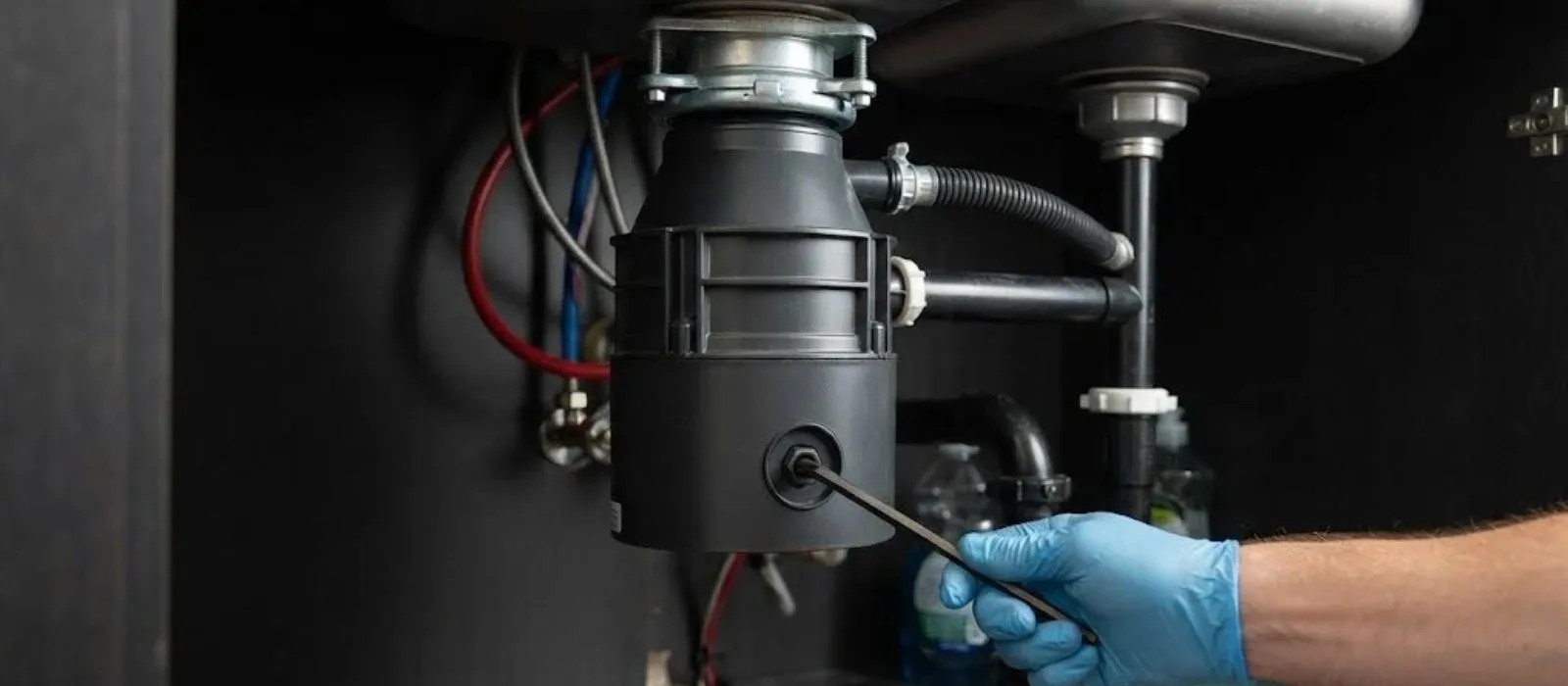
Most units have a hex socket in the bottom center. Insert the key that came with it and work it back and forth until the plate spins freely.
Pull the object
Shine a light in the drain. Use tongs to remove a bone, glass shard or utensil you can see.
Press reset
Wait ten minutes for the motor to cool, push the red button on the bottom, then run cold water and switch it on.
Know when to stop
If it hums again or trips the reset, the motor may be burned out. Further tries only heat it up.
Leaks from the back, the bottom or the sink flange
Dry the unit, tape paper towels around it, run water and watch which one gets wet first.
Sink flange
The ring where the disposal meets the sink seals with plumber putty or a gasket. If water seeps at the top, the mounting ring needs resetting.
Back of the unit
The dishwasher inlet and drain pipe connect at the back. A loose clamp is a quick fix, but a cracked fitting calls for a new unit.
Bottom of the unit
A leak here usually means internal seals or the housing failed. Once water reaches the motor bearings, the unit is done.
Drain outlet
The pipe on the side that leads to the trap can weep at the gasket or flange. Replacing the gasket often stops it.
Reconnecting the dishwasher hose after a replacement
A dishwasher drain hose attaches to a small inlet on the side of the disposal. New units have a plastic plug inside that inlet called a knockout. If it is not removed before the hose goes on, the dishwasher cannot drain, and dirty water sits in the tub.
We knock out the plug, fish the loose piece out of the chamber, and clamp the hose with a worm-drive clamp. The hose should rise to a high loop under the counter or connect to an air gap, then drop into the disposal. That prevents drain water from the sink flowing back into the dishwasher.
If you bought a unit and cannot get the hose to line up, a licensed plumber can handle that part of installing new fixtures in one visit.
Sizing a replacement and choosing the power connection
Disposals are rated by motor horsepower. Match what you cook and how many people use the kitchen.
One-third to one-half horsepower
Fine for light use in a small kitchen. These units jam more often with fibrous scraps.
Three-quarters horsepower
A good middle choice for most families, with enough torque for vegetable scraps.
One horsepower
The strongest residential size, better for big households and frequent cooking.
Hardwired or cord
Most kits include a power cord that plugs into an outlet under the sink. A hardwired unit connects to the circuit directly. If there is no outlet, a licensed electrician or plumber with electrical skill should add one.
What belongs in a disposal and what does not
Treating the unit like a trash can is the number one cause of clogs we find.
Safe in small amounts
- Soft cooked food scraps.
- Small citrus peels.
- Ice cubes for cleaning.
- Small, soft fruit scraps.
Never put down the drain
- Grease, fat or oil.
- Coffee grounds and eggshells.
- Potato peels, celery, corn husks.
- Bones, pits or fibrous stalks.
- Pasta, rice or bread that swells.
A disposal that grinds fine but a sink that will not drain
If the disposal spins freely but the sink backs up, the blockage sits in the trap or farther along the kitchen line. Grease cools in the pipe and builds a gummy layer. A plunger rarely clears it, but cabling the kitchen line often does. If the cabinet is wet but the disposal is dry, a leaking kitchen faucet above it is the next suspect.
What a disposal job costs, in plain terms
Every visit starts with a clear price before work starts. These items set the number.
Repair or replacement
Clearing a jam or tightening a clamp is quick. A new unit adds the disposal and labor.
Horsepower and brand
Heavier-duty models cost more and weigh more, which affects the install.
Electrical needs
Cord-and-plug swaps are easy. Adding an outlet or switch needs extra work.
Existing plumbing
A corroded drain tailpipe or trap often gets replaced at the same time.
After-hours calls
Evening and weekend emergency visits are priced differently from a scheduled one.
Homeowner policies often cover sudden water damage, like a disposal that cracks and floods a cabinet, but often not slow leaks or normal wear. Ask your insurer before repairs start.
Want your real number? Call (619) 927-0312
Call (619) 927-0312What to do before anyone reaches into the sink
A jammed disposal looks harmless, but the blades and the motor are not. These steps keep hands safe while you wait.
Cut the power
Turn off the wall switch, then the breaker that feeds the disposal. A switch alone can be bumped back on.
Keep hands out
Use tongs or pliers to lift out a spoon or bottle cap. Never put fingers into the grinding chamber, even when the unit is off.
Skip chemical openers
Caustic drain products sit in the sink and can splash on whoever works on the trap next. Plain hot water is a safer test.
Mop standing water
Water near the disposal's cord or the outlet under the sink is a shock risk. Dry the area before you reset anything.
Garbage Disposal Repair and Installation questions answered
Yes. We take disposal and sink emergencies at any hour. While you wait, turn off the switch, close the sink supply valves if water is spraying, and shut the dishwasher off. We book same-day visits when the schedule allows.
A drip from the sink flange or a hose clamp is a repair job and can wait a day. A drip from the bottom means the housing is failing, and the leak will grow. Stop using it and call.
Many people do. The tricky parts are the mounting ring, the dishwasher knockout and wiring. If you are replacing a unit that is plugged in, you can swap it with basic tools. If it is hardwired, call a professional.
The smell hides under the rubber splash guard and on the underside of the grind chamber. Scrub the guard with dish soap and a brush. If the odor stays, the drain line may hold grease and need cleaning.
Cold water keeps grease solid so it moves through the drain without sticking. Run it for at least fifteen seconds after switching off so the scraps clear the trap.
Most units run eight to twelve years with good habits. Grease, bones and hard scraps shorten that. If your unit is in that age range and has started to leak, replacement is the better value.
Yes, including El Cajon, Lemon Grove and Spring Valley. Tell us your ZIP code when you call so we can give a clear price before work starts.
Standards and sources
Disposals are electrical appliances connected to the sink drain. The maker's manual covers reset buttons, hex wrench jam clearing and safe use. The California Plumbing Code, based on the Uniform Plumbing Code (UPC), covers the trap and drain connection.
Never put a hand in a disposal. Turn the power off at the switch and breaker before you reach for a hex wrench or tongs.
Garbage Disposal Repair and Installation beyond La Mesa
The same dispatch line covers neighboring towns. Pick yours to see local notes.