
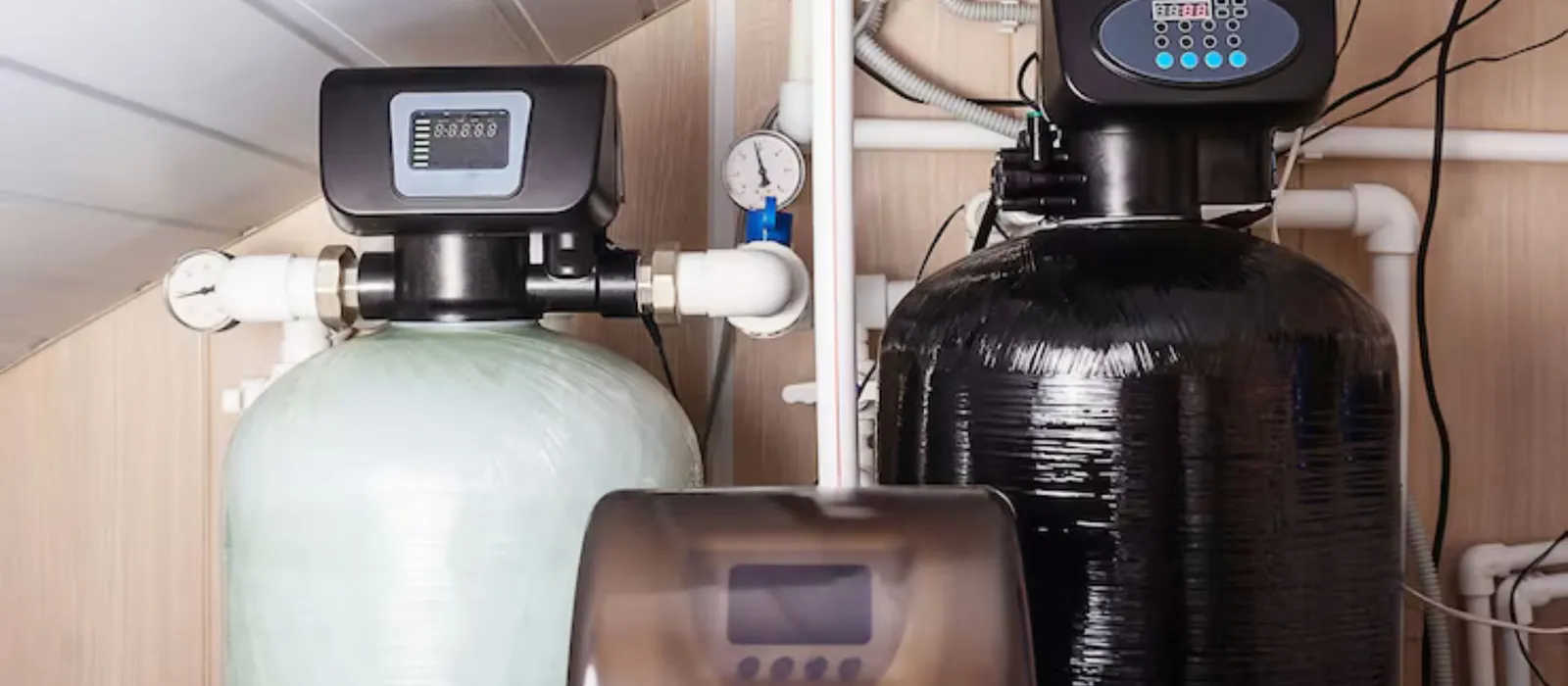
Why one softener price does not fit every house
Asking what a water softener costs installed in La Mesa, CA is like asking what a car costs. The answer depends on the model, the size and the work needed to put it in. Two neighbors on the same street can get very different totals for good reasons.
A fair quote separates the equipment, the labor and any plumbing changes. If a company gives one flat figure without asking about your water, your household and where the unit will sit, treat it as a rough guess. The real number should come in writing before anyone touches a pipe.
Six things that move the installed price
Unit type and brand
A basic timer-driven tank softener, a metered demand-regeneration unit and a dual-tank unit run at very different price points.
Grain capacity
Larger capacity costs more. Buying too small means constant regeneration, and too large wastes salt.
Household size
More people and more bathrooms means more gallons used each day, which pushes the unit size up.
Plumbing access
Exposed copper in a garage is quick. A tight utility closet, an upstairs location or a finished wall adds labor.
Drain and power
The softener needs a nearby drain for the brine and rinse water and an outlet for the control head. Extending either adds cost.
Bypass and existing equipment
A bypass valve lets you isolate the softener. If your home has no good valve layout or an old water heater, expect extra parts.
Regeneration salt choices at a glance
Softeners use a salt-based brine to recharge. The salt you choose affects running cost, not just the first bill.
| Choice | What it does | Trade-off |
|---|---|---|
| Sodium chloride (common salt). | Standard, well understood. | Adds a small amount of sodium to the water. |
| Potassium chloride | Same job, no added sodium. | Usually costs more per bag. |
| Pellets or crystals. | Different forms of salt. | Pellets are cleaner, crystals dissolve faster. |
| Salt-free conditioner | Changes how scale forms. | Does not remove hardness like a softener. |
| Dual-tank systems | Always have soft water. | More equipment and floor space. |
Ask which salt your chosen model works with, and whether it needs an adjusted setting for potassium.
How an installation visit usually goes
Test the water and walk the site
The plumber checks your water hardness, looks at where the main line enters the house and chooses a location near a drain and an outlet.
Pick the unit size
Daily use is estimated by multiplying people, gallons used per person and hardness. A family of four using about 75 gallons each at 12 grains per gallon needs to soften roughly 3,600 grains a day.
Shut off the water and set the bypass
The main valve is closed, pipes are cut or fittings are added, and a bypass is installed so you can isolate the unit.
Connect the drain and power
A drain line carries brine and rinse water to a proper drain with an air gap. The control head plugs into a nearby outlet.
Program, rinse and check
The unit is filled with salt, the hardness setting is entered, and the system is flushed. The plumber checks for leaks and shows you how to refill the salt.
What a clear written price should list
Ask for the quote to name the model and grain capacity, the salt type it uses, the plumbing parts included and the drain and power work. Anything left out of that list is where surprises hide later.
Also ask what the first salt fill covers, how the unit will be set to your hardness and whether the old softener, if you have one, will be removed. A written scope lets you compare two quotes line by line instead of by one total.
Softener, filter or both
Softeners and filters do different jobs. Decide what you actually want to fix.
A water softener
- Removes calcium and magnesium that cause scale.
- Protects water heaters and fixtures from buildup.
- Needs salt and a drain connection.
- Does not remove disinfectant taste.
- Helps soap lather and reduces spotting.
A filter system
- Uses carbon or other media to improve taste and smell.
- Reduces chlorine or chloramine taste when matched to the media.
- Does not stop scale on its own.
- Uses cartridges or media that need replacing.
- Can be added in line with a softener.
How the water heater affects the job
Soft water is easier on a water heater, because scale builds up fastest in hot water. If your tank is old, ask whether replacing the heater at the same visit would save a second shutdown. A tankless water heater that is prone to scale benefits strongly from softened supply.
Check that your plumbing near the heater can take the added connections. Plan a short interruption of hot water on install day. A reputable installer will tell you how long the system will be off before work starts.
Permits and who to ask
Permit rules vary, so ask the City of La Mesa building staff before work starts. Do not assume a permit is or is not needed, and do not assume the installer has checked. Ask your plumber what they handle and what you should confirm.
Verify the contractor on the California Contractors State License Board site at cslb.ca.gov before you sign anything. For a softener, look for a licensed plumber who will explain the plumbing side, not just sell a unit. A softener and its plumbing are installed together, so water softener and filtration installation should come with a plain written scope.
Homeowners in El Cajon and Spring Valley can call (619) 927-0312 to talk through a softener plan. The real price comes in writing before work starts.
What La Mesa homeowners should know
The Helix Water District 2025 report listed average hardness of 206 mg/L, which is 12.0 grains per gallon. The range was 155 to 250 mg/L, or 9.1 to 14.6 gpg. On the common USGS scale, anything over 180 mg/L is very hard, so a softener has real work to do here. Use 12 gpg for sizing, but test your own tap because blends can vary.
Helix also reported an average pH of 8.3 and chloramine as the disinfectant. A softener does not remove disinfectant, so if taste matters to you, ask about a carbon filter alongside it. Bring your water test result to the quote visit so the grain capacity and regeneration setting match your tap.
Sources used: Helix Water District 2025 Annual Water Quality Report, City of La Mesa permits guidance, California Contractors State License Board. Plumbing work in California follows the California Plumbing Code, which is based on the Uniform Plumbing Code (UPC).
Quick answers
Equipment size, plumbing access, drain and power distance, and extras like a bypass or a new shutoff all change the labor and parts. A garage install with copper and a drain nearby is simple. An interior closet may need new piping.
Multiply the number of people by about 75 gallons a day, then by your hardness in grains per gallon. That is the grains removed daily. Pick a unit that regenerates about once a week or less. Your plumber will confirm with a test.
Potassium chloride avoids adding sodium, but it usually costs more to run. Either works for softening when the unit is set up for it. Ask the installer which your model prefers and whether a setting adjustment is needed.
Permit rules vary, so ask the City of La Mesa building staff before work starts. We will not tell you a permit is or is not required. Ask your plumber what they handle and keep any paperwork for your records.
Helix reported an average of 12.0 grains per gallon in 2025, with a range from 9.1 to 14.6. That is very hard on the common scale. Use your own tap test for sizing, since street-by-street blends can differ.