
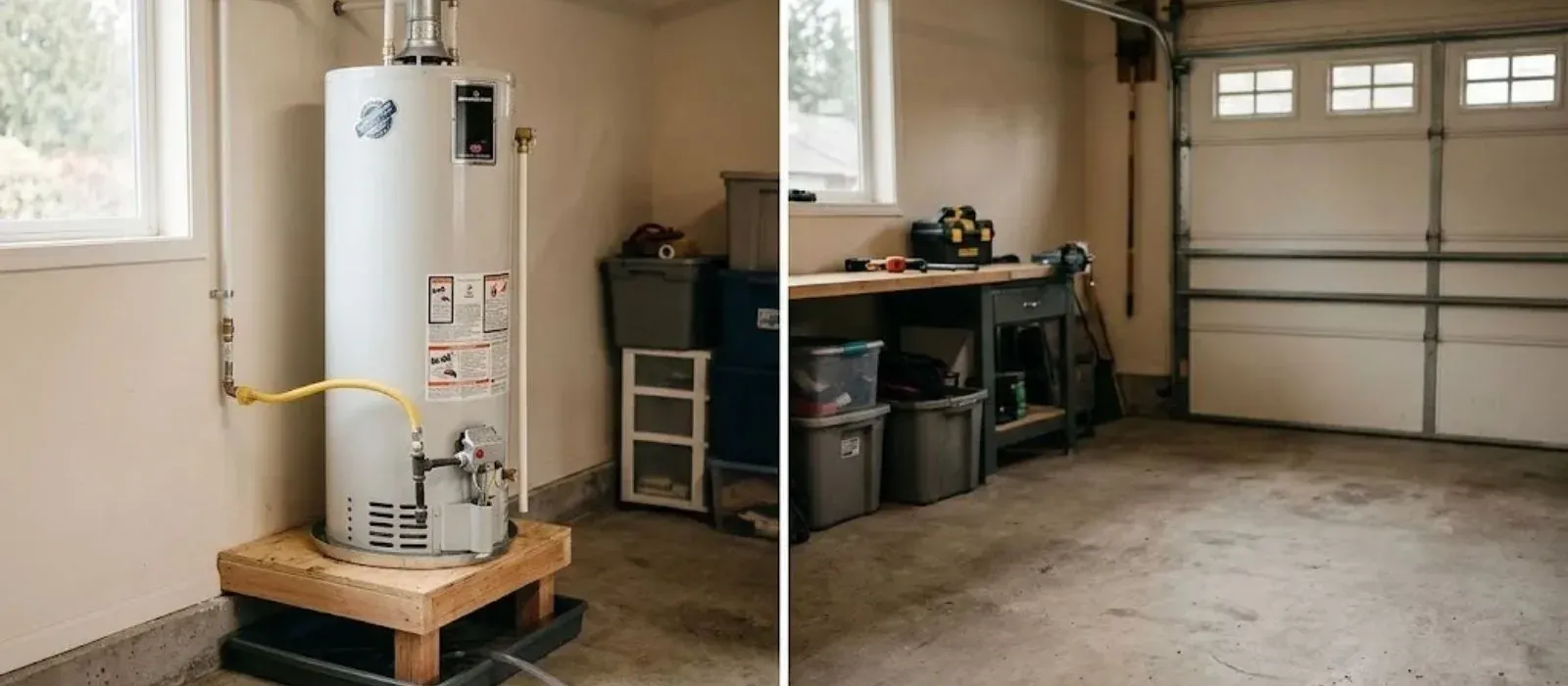
The short answer on installed price
A hot water heater installation is more than the heater. The price covers the unit, removal of the old one, new connectors and valves, venting or wiring, safety parts, and the labor to tie it all together. A simple swap of the same type in the same spot is the low end of the range. A change of fuel or location is the high end.
The biggest swings come from three choices you make before anyone arrives: the heater type, the size, and where it sits. Settle those and the quote becomes easy to compare.
Seven things that move the price up or down
Tank size and type
A 50-gallon tank costs more than a 40, and a heat pump or tankless unit costs more than either. Pick the size from your household, not from what the old one was.
Gas, electric or heat pump
Electric tanks are the simplest to install. Gas needs a flue and a gas connection. A heat pump unit needs clearance, a condensate drain and often more room for air.
Venting
A gas heater needs a proper vent path. If the old flue is too small, rusted or routed wrong, it must be rebuilt before the new unit can run.
Location and access
A garage floor is easy. An attic, a tight closet or a second floor adds labor, hauling and extra leak protection.
Code and safety items
Seismic bracing, a pressure relief valve and discharge line, a drain pan and an expansion tank are the usual extras. They are part of a correct install, not an upsell.
Gas line and electrical
Moving or upsizing a gas line, or adding a dedicated electrical circuit, is separate work that adds to the total.
Removal and disposal
The old tank has to be drained, cut loose and hauled away. Heavy, rusted or hard-to-reach tanks take more time.
Same house, different choices: what changes
| Choice | What it adds | Watch for |
|---|---|---|
| Like-for-like tank swap. | Least new parts. | Old valves and connectors in poor shape. |
| Gas to electric or heat pump. | New circuit, drain, cap the gas. | Panel capacity and clearance. |
| Tank to tankless. | Gas line upsizing, new vent. | Larger gas load and wall space. |
| Move to a new location. | New pipe runs, vent and pan. | Longer trips for hot water. |
| Bigger tank | Wider floor space, stronger straps. | Door and stair clearance. |
Ask your plumber to list these items by name on the written price. A short quote with no items is a warning sign.
Bracing is part of every install in California
California Health and Safety Code section 19211 requires water heaters to be braced, anchored or strapped to resist falling or horizontal movement in an earthquake. It applies to new and replacement units, and a pre-engineered strapping kit covers standard units up to 120 gallons. Because the law covers every new or replacement heater, the straps, anchors and any blocking are part of the install, so they belong on the written price.
Look at your current heater. If it has no straps or the straps are loose, a new installer should fix that regardless of the brand you choose. The minimum standard is the California Plumbing Code, which local jurisdictions may modify, so ask your plumber what applies at your address.
Tank or tankless: which one costs more to put in
Neither is always cheaper. Here is how the two paths usually compare once the work is done.
Standard tank
- Lower equipment price.
- Often fits the existing gas and vent.
- Needs floor space and a drain pan.
- Runs out when demand is high.
- Lifespan is shorter in hard water.
Tankless unit
- Higher equipment price.
- May need a bigger gas line and new vent.
- Mounts on a wall to free floor space.
- Endless hot water at a set flow.
- Needs descaling in hard water.
What happens on install day
Shut down and drain
The plumber turns off water and fuel or power, then drains the old tank to a hose and drain.
Disconnect and remove
Lines, vent and connectors come off. The old tank is moved out of the way and hauled off.
Set the new unit
The heater goes onto a pan or stand. Straps are fitted and the unit is checked for level.
Connect and protect
Water, gas or electric, vent, relief valve, drain line and any expansion tank are installed, with new flex connectors where needed.
Fire up and test
The unit is filled, air is purged, joints are checked for leaks and the plumber confirms flame, venting and temperature.
Cost after the install: hard water and scale
Helix Water District reported an average hardness of 12.0 grains per gallon for 2025, with a range of 9.1 to 14.6. On the common USGS scale that is very hard. Hard water leaves scale inside a tank heater and on the heat exchanger of a tankless unit. Water blends can vary by street, so check your own tap or ask Helix.
Add a scale plan to the decision. Flush a tank once a year, check the anode rod, and consider a softener or scale filter. A tankless unit should be descaled on a schedule. A heater that skips this fails sooner, which raises your total cost over the years.
Ask each plumber for the same list: unit model and size, venting, bracing, relief valve and discharge, pan and drain, expansion tank, gas or electrical work, and haul-away. Compare lists first, price second.
When to call and what we need to know
If your tank is leaking at the base, the unit is more than ten years old, or you have no hot water at all, a replacement is likely coming. Our team handles planned water heater installation and straight swaps through water heater replacement across the area, from El Cajon to Lemon Grove.
When you call (619) 927-0312, have the model label, fuel type, tank size and photos of the area ready. If you smell gas, leave the building and call San Diego Gas and Electric or 911 before calling us. Check any plumber's license at cslb.ca.gov.
Two local items that shape your water heater decision
Helix Water District reported that the 2025 distribution average was 12.0 grains per gallon. Because very hard water builds scale in a tank, ask your installer for a flush schedule and an anode check at each yearly visit. If you are choosing a new unit, ask about a softener or scale filter before you finalize the plan.
State law requires bracing, anchoring or strapping on new and replacement water heaters under Health and Safety Code 19211. Since this applies to every install, confirm that the strapping is on your written price instead of treating it as an add-on.
Sources used: Helix Water District 2025 water quality report, California Health and Safety Code 19211. Plumbing work in California follows the California Plumbing Code, which is based on the Uniform Plumbing Code (UPC).
Quick answers
Quotes vary because the jobs differ. Tank size, fuel, venting, access, code parts and haul-away all change the scope. A quote that lists each item is easier to compare than a single total. Ask for the written price with all items named.
Usually the equipment costs more and the install needs space, air flow, a condensate drain and power. It may save on energy use later. Ask your plumber about clearance and the electrical circuit before you commit.
Many homes with a closed system, such as one with a check valve or pressure regulator, benefit from one. It absorbs the pressure rise as water heats. Your plumber can test your system and tell you if one belongs on your install.
Water, gas, venting and electric work all carry risk, and mistakes can mean leaks, fire or carbon monoxide. Permit rules vary, so ask City of La Mesa building staff before work starts. Most homeowners are safer hiring a licensed plumber.
A like-for-like swap is often done in a morning or afternoon. Fuel changes, new venting or relocations take longer. Your plumber should tell you the plan on the call so you can plan around no hot water.
Helix reported an average of 12.0 grains per gallon in 2025, which is very hard on the USGS scale. That can speed scale buildup, so a yearly flush and anode check helps. Ask Helix about your street, since blends can vary.