
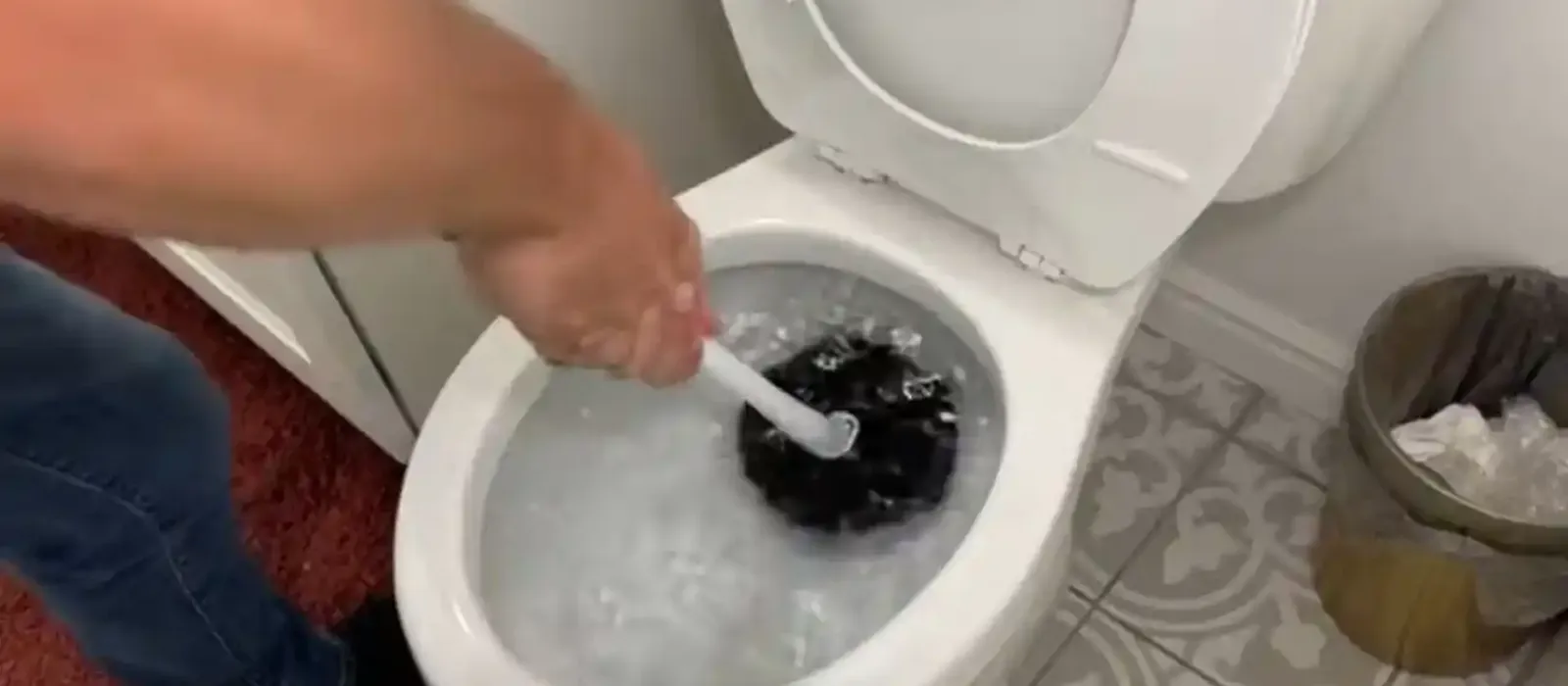
Why paper alone can stop a toilet
Toilet paper is made to break down in water, but it needs water volume and time. A modern toilet uses about 1.28 gallons per flush, called gpf. Older toilets used much more. A low-flow bowl can move a normal amount of paper, but a big wad or a thick roll can stall in the trap before the next flush pushes it through.
A clog that clears with one plunge was a paper problem. A toilet that clogs again within days is telling you something else, such as a weak flush, a partly blocked branch drain, or a vent that is not letting air in.
How to clear a paper clog without making a mess
Stop flushing
Do not flush again to see if it went away. If the bowl is near the rim, close the shutoff valve on the wall behind the toilet to stop more water coming in.
Use the right plunger
A flange plunger has a rubber sleeve that seats in the drain. Press down slowly to seat it, then push and pull with steady strokes for about twenty seconds.
Add hot, not boiling, water
A bucket of hot tap water poured from waist height can soften paper. Boiling water can crack porcelain, so skip it.
Try a toilet auger
If the plunger fails, feed a closet auger into the bowl, crank until it grabs, and pull the clog back. Go slowly to protect the porcelain.
Test with a small flush
Pour in a bucket of water to see if the bowl drains. If it does, flush once and watch the full cycle. Keep a few towels and a bucket close in case the bowl rises.
Plunger and tool choices for a toilet clog
| Tool | Best use | Skip it when |
|---|---|---|
| Flange plunger | Paper and soft waste clogs. | The bowl is overflowing. |
| Cup plunger | Sinks and tubs only. | You need to seal a toilet drain. |
| Closet auger | Stubborn or deep paper clogs. | You hit a hard object. |
| Hand drain snake. | Not for toilets. | Porcelain scratches easily. |
| Chemical opener | Do not use. | It can burn skin and harm pipes. |
A cup plunger is flat on the bottom and a flange plunger has an extra rubber fold. The fold is what lets the toilet drain seal.
What really causes repeat paper clogs
When the same toilet clogs again, check these before you reach for the plunger a third time.
Too much paper per flush
Wrapping a lot of paper around your hand makes one dense wad. Use a few squares at a time, and flush twice for long sessions.
Thick or quilted brands
Extra-plush paper holds together longer. Switch to a thinner, septic-safe paper and see if clogs drop.
Weak flush
Mineral buildup in the rim jets, a worn flapper, or low tank water cuts flush force. A toilet repair can restore the full cycle.
Partial drain blockage
Roots, grease or buildup in the line slow everything down. Paper then has nothing to push it along.
Flushing things that are not paper
Wipes, cotton and paper towels do not break down like toilet paper and form a mat in the drain.
The flushable wipe myth
Packages say flushable, but wipes do not fall apart like toilet paper. They snag on roots and rough pipe joints and catch other paper. One wipe is rarely the problem. A pile builds up over weeks.
If you have used wipes for a while and now face repeat clogs, stop flushing them. The line may need a drain cleaning to clear the mat of wipes and paper to restore flow. Keep a small covered trash can next to the toilet so the wipes have somewhere else to go.
Fixture clog or drain line clog: how to tell
Likely just the toilet
- Only one toilet is slow.
- Plunging clears it for weeks.
- Other drains run normally.
- Clog came after heavy paper use.
Likely the drain line
- Two or more fixtures drain slowly.
- Gurgling sounds from tubs or sinks.
- Water rises in a tub when you flush.
- Clogs return within days.
Habits that keep paper moving
Flush in two rounds
After a long visit, flush once midway and again at the end. Two small loads move easier than one big one.
Clean the rim jets
Mineral deposits can block the small holes under the rim. A small brush or a vinegar soak restores flow.
Check the tank
Water in the tank should reach the fill line. If the flapper leaks or the chain is too long, the flush weakens.
Keep a plunger handy
A flange plunger within reach lets you clear a clog in seconds instead of waiting for a service call.
Kids, guests and busy bathrooms
Children use a lot of paper and often flush toys, wipes or too much at once. Show them how many squares to use, and keep a plunger where they can reach it. Teach older kids to stop and tell an adult if the bowl rises instead of flushing again.
Guests and rental properties add another layer. Short stay visitors may not know the toilet is sensitive. A small sign near the toilet that lists what to flush can save a call.
When to call a plumber
Call us if plunging and an auger do not clear the bowl, if you see water at the base, or if more than one fixture is affected. Our licensed plumbers do toilet repair for weak flushes and leaks and can camera the line if clogs keep returning. Service is available in Lemon Grove and El Cajon as well.
Do not mix chemical drain cleaners with a plunger. Splashes can burn skin and eyes. If sewage is on the floor, keep children and pets away, wear gloves and call (619) 927-0312. The real number is given as a written price before work starts. It depends on the cause, access and whether the line needs cleaning.
For Lemon Grove renters and landlords
In Lemon Grove, about 46.7 percent of housing is renter-occupied, so many households share a building drain or depend on a landlord for repairs. If your toilet clogs more than once, tell your landlord or property manager in writing instead of only plunging. Repeat clogs can signal a problem in a shared line, and that line may need a cleaning rather than another plunge.
Landlords should treat two toilets with the same problem in one building as a line issue and book a cleaning. A shared drain that backs up can affect other units, and it is better to clear it before a backup floods someone's floor.
Sources used: Lemon Grove 2020 census housing data, general plumbing practice. Plumbing work in California follows the California Plumbing Code, which is based on the Uniform Plumbing Code (UPC).
Quick answers
A handful of squares per flush is safe for most 1.28 gpf toilets. If you need a large wad, flush twice. A weak flush or heavy paper use can clog even a healthy line.
Start with a flange plunger. If it fails after a few tries, use a closet auger. Skip a regular drain snake because it can scratch porcelain.
No. Chemicals can splash, damage the bowl finish and make a later repair dangerous for the plumber. Use a plunger or auger instead.
That usually points to a weak flush or a partial blockage that slows the water. Check the tank water level and flapper, then ask a plumber to look at the drain line.
Who pays depends on your lease and what caused the clog. Report it to your landlord or property manager early and in writing. If a shared drain is the cause, a line cleaning is often arranged by the property owner. Check your lease.