
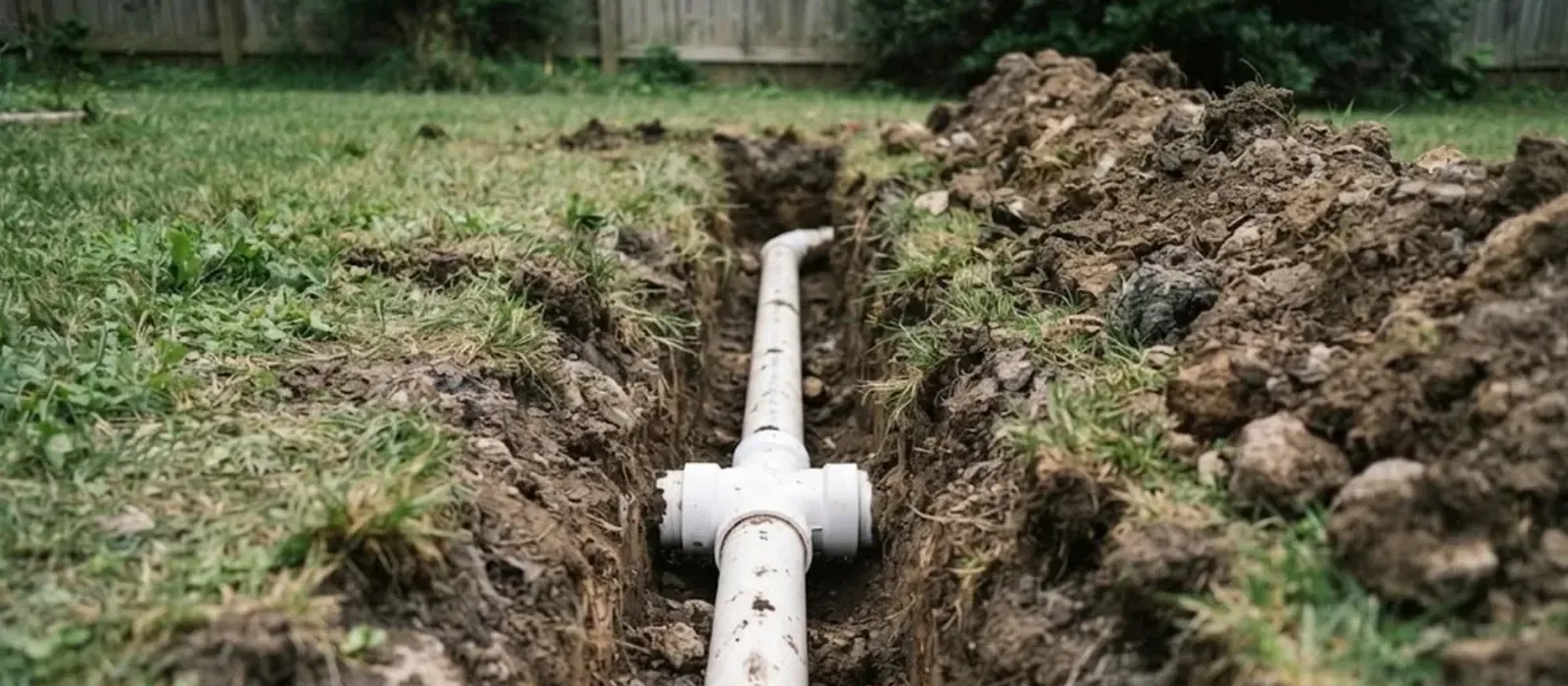
Reading PVC: schedule, sizes and what the markings tell you
PVC is white plastic pipe. Schedule 40 is the common wall thickness for home drains, vents and many cold-water uses. The schedule number describes wall thickness, so a given nominal size has the same outside diameter across schedules, which keeps fittings compatible.
The markings printed on the pipe tell you the size, the schedule, the material and whether it is rated for pressure. Fittings carry similar marks. Read them in the store, not after you glue.
Buy matching parts. A thin-wall fitting on schedule 40 pipe, or a drain fitting used where pressure is present, will fail.
Common PVC fittings and what each one is for
| Fitting | What it does | Typical use |
|---|---|---|
| Coupling | Joins two pipes in a line. | Repairing a cut or cracked section. |
| Elbow, 90 or 45. | Changes direction | Turns in drains and supply lines. |
| Tee and wye. | Adds a branch. | Sink branch, vent tie-in. |
| Reducer | Joins two sizes. | Stepping down at a branch. |
| Male or female adapter. | Connects plastic to threads. | Valves, faucets, cleanouts. |
| Cap or plug. | Seals an end. | Capping a stub, testing. |
| Union | Allows disassembly | Equipment connections |
Drain lines usually take long-sweep elbows and wyes because they let waste flow, while sharp elbows suit supply lines.
Drain-waste-vent fittings versus pressure fittings
The two families look similar and are not interchangeable.
DWV fittings
- Made for gravity drains and vents.
- Smooth interior with gentle bends.
- Not rated for water pressure.
- Often marked DWV on the body.
Pressure fittings
- Made for pressurized cold water.
- Heavier walls and pressure ratings.
- Tighter bends are allowed.
- Used for lawn irrigation and supply runs.
How a solvent-welded joint is made
Cut square and deburr
Use a cutter or fine saw, then remove the shavings from the inside and outside edge. Dry fit to check the depth.
Mark the depth
Draw a line on the pipe at the socket depth, so you know it is fully seated later.
Prime both surfaces
Primer softens the plastic. Apply it to the pipe end and the socket, and let it flash off per the can.
Cement and twist
Spread cement on both surfaces, push the pipe in, give a quarter turn and hold it for the time on the label.
Wipe, wait and test
Wipe the bead, let it cure for the time listed before water or pressure is applied, then test under supervision.
Where PVC is the wrong choice
PVC is cheap and light, but it has limits that cause real failures.
Hot water lines
Standard PVC softens with heat and is not for hot supply. Use a material rated for hot water.
Near a water heater
Do not connect PVC directly to the heater's hot outlet or the relief valve discharge.
Sunny exposed runs
Sunlight can make PVC brittle unless it is protected or painted.
Compressed air
PVC can shatter under compressed air, so never use it for air lines.
Mixed plastics
ABS and PVC need transition cement or fittings. Do not assume they bond.
Transitions to cast iron, copper and galvanized steel
Older homes often have cast iron drains or galvanized supply lines. PVC does not glue to those. The usual way to join them is a rubber coupling with stainless bands, which clamps around both pipes.
For copper, use a proper transition fitting such as a threaded adapter or a rated mechanical coupling. A dielectric piece helps where dissimilar metals meet.
Pipe ends must be clean and round, and the coupling must match both outside diameters. If the old pipe is flaking, scaly or cracked, the coupling will not seal and the pipe needs replacing first.
Common mistakes that cause leaks and slow drains
The biggest mistake is skipping primer or rushing the cure. A joint that looks glued can still weep once the system is pressurized or filled.
The next is using the wrong angle. A flat 90 degree elbow on a horizontal drain traps solids and invites clogs. Use sweeps and keep the slope consistent.
Last is ignoring venting. A drain with no vent gurgles and can siphon traps dry. Changing a vent is not a casual fix.
A smaller habit also helps. Dry fit every run before you open the cement, and lay the parts out in order on the floor. If one piece will not seat without force, stop and find out why, because forcing a fitting usually leaves a stressed joint that fails months later.
When to call a plumber instead of gluing it yourself
Small cold-water and drain repairs are within reach for a careful homeowner. Calls we advise making include any change in the layout of drain or vent lines, a leak inside a wall, a cracked line with no clear shutoff, or a fitting that has been re-glued and still leaks.
If a pipe has failed and water is spraying, close the main valve first. Our team handles burst or cracked pipe repair, including fittings that were pulled or glued wrong, with a written price before we begin.
For a layout change or new run, new plumbing installation done to code is the better route. It covers sizing, slope, venting and testing.
This applies from Lemon Grove to El Cajon and everywhere our crews work around La Mesa.
What drives cost on a PVC fitting job
We do not name figures in a blog. You get a written price before work starts. These are the factors.
Pipe size and length
Larger lines mean bigger fittings and more labor.
Access
Open crawlspace beats a closed wall or slab.
Transitions
Mating plastic to old iron, copper or steel adds parts.
Venting and slope
Layout changes add scope and testing.
Wall or floor repair
Opening a surface adds repair work afterward.
Homeowner policies often cover sudden and accidental pipe failure but often not wear or slow leaks, so ask your insurer.
Want your real number? Call (619) 927-0312
Call (619) 927-0312Code and La Mesa: check before you change drains
The California Plumbing Code is the minimum standard, and local jurisdictions may modify it. That matters for PVC work because fitting type, venting and where plastic is allowed can be affected by those local changes.
Before you change a drain or vent line, ask City of La Mesa building staff what applies to your project. Do it before you buy fittings, so you do not glue the wrong layout. Permit rules vary, and the answer is for staff to give.
Bring a simple sketch and photos to the call. It makes the answer faster and clearer.
Sources used: California Plumbing Code (minimum standard), City of La Mesa contact page. Plumbing work in California follows the California Plumbing Code, which is based on the Uniform Plumbing Code (UPC).
Quick answers
No. Standard PVC softens under heat and is not meant for hot supply. Use a material rated for hot water, and do not connect PVC directly to a water heater outlet.
Yes, in most cases. Primer softens the plastic so the cement can fuse it, and many joints that skip it leak later. Check the can and the local rules for your project.
No. Both are plastic drain pipes, but they are different materials with different cements. Joining them takes a transition cement or a rubber coupling.
Follow the cure times printed on the cement can, which depend on size, temperature and pressure. When in doubt, wait longer before running water.
A rubber coupling with stainless bands is common. It clamps both pipes and tolerates small differences in outside diameter. The cast iron ends must be sound.
Do not assume. The California Plumbing Code is the minimum standard and local jurisdictions may modify it, so ask City of La Mesa building staff before you change drain or vent lines.