
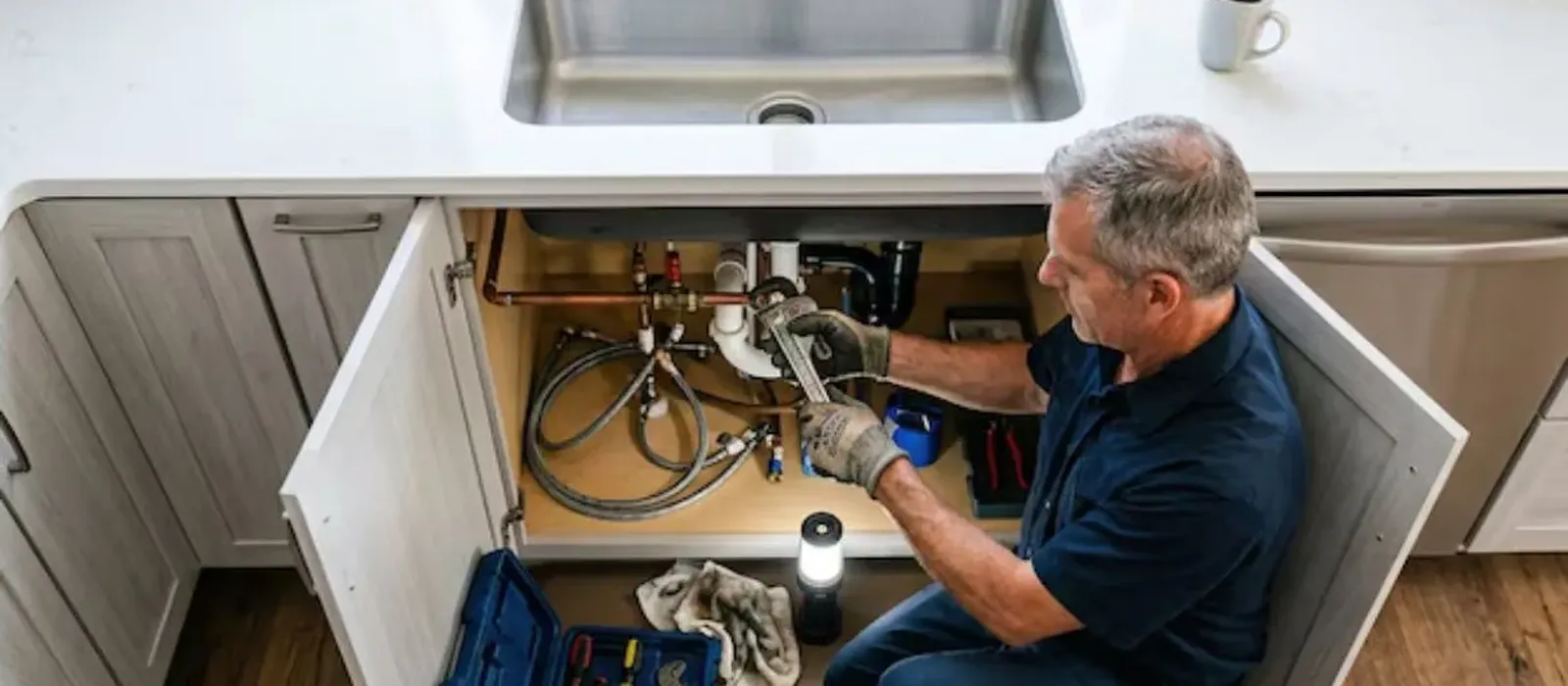
What a plumbing maintenance plan covers
A plumbing maintenance plan for a La Mesa, CA home is a calendar of small inspections. Exercise the shutoff valves, flush the water heater, look at every supply line, run the drains, and test for hidden leaks with the water meter. Each task takes minutes. Skipping them is how a cheap worn part turns into a wet ceiling.
Split the work into two seasons. Spring is for the water heater, hose bibs and valves. Autumn is for yard drains, gutters and cleanouts before the wet months. Everything else is a quick monthly or yearly look that you can do with a flashlight and a dry paper towel.
The checklist by season
Print this or save it on your phone.
| When | Task | If it fails |
|---|---|---|
| Spring | Flush the water heater and check the anode rod. | Heavy sediment or a rod eaten down to the wire means service soon. |
| Spring | Open and close every shutoff valve. | A stuck or weeping valve needs replacing. |
| Spring | Inspect hose bibs and supply lines. | Drips, bulges or crusty fittings need new parts. |
| Summer | Look at exposed outdoor lines and the water heater area. | Cracked insulation or sun-baked fittings need attention. |
| Autumn | Clear yard drains, gutters and cleanouts. | Standing water after a rinse means a blockage. |
| Any month | Meter test with every fixture off. | A moving dial means a leak somewhere. |
Spring pass, step by step
Exercise the shutoff valves
Find the main valve and the stops under each sink and toilet. Turn each one fully closed and fully open once. Learn that a valve is seized on a calm afternoon, not during a leak. If a handle will not move with firm hand pressure, stop and do not force it.
Flush the water heater
Turn the heater to its pilot or vacation setting, close the cold inlet, attach a hose to the drain valve and run it to a driveway or floor drain. Open a hot tap upstairs so the tank can drain. Let it run until the water comes out clear, then close everything and relight.
Check the anode rod
The anode rod is the sacrificial metal that corrodes so the tank steel does not. Unscrew it from the top of the tank with a socket. If it is thin, pitted or coated in calcium so the core wire shows, it is spent. A new rod is far cheaper than a new tank.
Look at every supply line
Braided stainless connectors under sinks and behind toilets last roughly five to ten years. Look for rust on the nuts, a bulge in the braid or a damp spot on the cabinet floor. Replace any that look tired.
Test hose bibs
Attach a hose, turn the spigot on, then squeeze the hose end closed. A leak at the handle stem or behind the wall means a failing packing nut or washer.
Small checks that save the most water
Toilet dye test
Drop food coloring in the tank and wait twenty minutes. Color in the bowl without flushing means the flapper is leaking, a silent water waster.
Under-sink paper towel
Run a dry paper towel along every trap and supply connection. Dampness shows up here weeks before a stain does.
Drain runs
Run hot water in each tub, shower and sink for a full minute. Slow or gurgling drains mean buildup that should be cleared before it stops completely.
Water heater pressure valve
Lift the test lever on the temperature and pressure relief valve for a second. It should snap back and stop dripping. If it keeps dripping, call.
Cleanout caps
Find the capped cleanout outside near the house and confirm you can reach and loosen it. You will want that access if the main drain ever backs up.
How to run a meter leak test
Turn off every fixture, the ice maker and the irrigation. Find the water meter and note the small leak indicator, usually a tiny triangle or wheel. If it spins, or the digits change after fifteen minutes, water is escaping somewhere.
Then close your own main valve and check again. If the meter stops, the leak is inside the house or on your side of the valve. If it keeps moving, the leak is upstream of your valve, and that part of the line belongs to the utility. Write down the reading and the time before you call anyone.
For a leak that stays hidden after this test, a technician can use acoustic and thermal tools. Our team does that kind of tracing, and the real price is given in writing before any work starts. If the hidden problem is a slow drain rather than a supply leak, a drain cleaning visit with a camera or cable finds it faster than guessing.
Do it yourself or call a plumber
Good for you to handle
- Exercising shutoff valves.
- Toilet dye tests and flapper swaps.
- Replacing a braided supply line with the water off.
- Draining a few gallons from the water heater.
- Cleaning faucet aerators and showerheads.
Better left to a licensed plumber
- A valve that will not turn or leaks at the stem.
- A rusted tank or a relief valve that keeps dripping.
- Gas connections at the heater.
- Repeated drain backups.
- Any leak you cannot trace to a source.
When flushing and anode checks point to a repair
Gritty white or tan chunks in the flush water, a tank that rumbles when it heats, and hot water that runs out sooner than it used to are all signs of scale. Another flush often helps. If it does not, the heater may need attention, and a water heater that makes popping noises or leaks from the base is worth a call before the tank itself fails.
Seismic strapping is part of the plan too. California Health and Safety Code section 19211 requires water heaters to be braced, anchored or strapped against falling or sideways movement in an earthquake. Check the straps are tight and the tank cannot rock.
Safety rules while you work
Water off first
Close the main or the local stop before you unscrew anything. Keep a bucket and towels at hand.
Let the tank cool
Water drained from a heater can scald. Give it time and point the hose away from pets and children.
Gas stays with the professionals
If you smell gas, leave the building and call the gas utility or 911 first. Do not call a plumber until you are outside and safe.
If a task makes you hesitate, treat that as the signal to call. Homeowners in Spring Valley and Lemon Grove can follow the same plan, and our 24/7 emergency line covers both when a check turns up something urgent.
What La Mesa homeowners should know
La Mesa gets about 13 inches of rain a year, and most of it falls from November through March. That makes autumn the right time to clear yard drains, gutters and downspout lines, because a drain that backs up in the first real storm sends water toward the foundation. Run a hose into each yard drain in October and see how fast it empties.
Summer average highs run 78 to 92 F and winter average highs sit between 66 and 77 F. A hard freeze is not the main yearly risk here, so your summer pass is the more useful one: look for sun-baked insulation, cracked plastic fittings and hose bibs that have been in direct sun all season, and replace anything brittle.
Helix Water District reported an average hardness of 12.0 grains per gallon in 2025, which is very hard on the common scale. Hard water leaves scale in tanks, so use that as your reason to flush the water heater at least once a year, and look at the anode rod at the same visit. Blends can vary, so test your own tap.
Sources used: Helix Water District 2025 Annual Water Quality Report, California Health and Safety Code 19211, general plumbing practice. Plumbing work in California follows the California Plumbing Code, which is based on the Uniform Plumbing Code (UPC).
Quick answers
Once a year is the usual minimum for a tank heater. Where hardness is high, many plumbers suggest checking the sediment twice a year. If the drain water comes out cloudy or gritty, flush again until it runs clear. Tankless heaters need a separate descale flush.
It is usually where the water line enters the house, often near the water heater, in a garage wall, or at an outside wall facing the street. Look for a round wheel handle or a lever. Turn a lever a quarter turn, or a wheel clockwise until it stops.
Braided stainless supply lines are commonly replaced every five to ten years. Replace sooner if you see rust, a bulge in the braid or moisture around the nuts. Rubber hoses at the washing machine are worth swapping on a similar timeline.
Yes, within limits. Flush with hot water, clean strainers and pop-up stoppers, and avoid grease and wipes. Skip chemical openers, which can damage older pipes and make later work unsafe. Persistent slow drains call for professional drain cleaning before they block.
Clear leaves from gutters and downspouts, then pour a bucket of water into each yard drain and watch how fast it clears. Confirm the cleanout cap on your sewer line is accessible. If a drain stays full, mark it and arrange to have it cleared before the first storms.