
Run the meter test before you dig, call or guess
Make sure nothing uses water. Shut off irrigation, the ice maker and the dishwasher, and confirm no one is showering or flushing. Then open the meter box and read the meter. Many meters have a small triangle or wheel that spins with even tiny flow.
Wait fifteen minutes, ideally longer, and look again. If the leak indicator moves or the numbers have advanced, you have a leak. If it stays still, the loss is probably in a fixture that was running or your reading was wrong.
Write down the first and second readings with the time. That record helps a plumber narrow the search and helps you explain a high bill.
Splitting the line to learn which section is leaking
Close the main shutoff at the house
Locate the valve where the line enters the house, close it and recheck the meter. If the meter still runs, the leak is between the meter and that valve.
Reopen it and test indoors
If the meter stopped with the house valve closed, the leak is on the house side. Check toilets with dye tablets, then look for hot spots on slab floors.
Test the hot side separately
Turn off the water heater supply. A change in meter speed can point to the heater lines.
Check irrigation on its own
Close the irrigation shutoff if you have one. A stuck valve or broken sprinkler line is a common hidden loss.
Mark what you learned
A short note like meter runs, house valve closed, tells us the leak is in the buried service line.
Signs of a buried leak you can see, hear or feel
Underground leaks rarely announce themselves. They leave small traces.
Wet or soft soil on a dry day
A patch that stays damp when nothing has watered it is a strong clue.
Green, lush strips of lawn
Water seeping from a line feeds grass faster than the rest of the yard.
Sudden pressure change
A drop at the taps can follow a break in the supply line.
Hissing or running sounds
Listen near the meter and the house entry with everything off.
A bill that keeps climbing
A steady rise with no change in habits is often a slow leak.
Warm spots on the floor
A hot patch on a slab can come from a hot water line leak.
Leak or just wet ground after a storm
Soil that is wet after rain is not a leak. Your checks must be fair to the weather.
Probably rain or irrigation
- Wet only for a day or two after a storm.
- Meter holds still with everything off.
- Damp areas where water drains and collects.
- Gutter or downspout is dumping nearby.
Probably a leak
- Wet in dry weather for several days.
- Meter keeps moving with fixtures off.
- The same spot stays wet along a line.
- Bill is rising with no change in use.
What each result means and what to do next
| What you find | What it suggests | Next move |
|---|---|---|
| Meter moves, house valve closed. | Leak in service line. | Call for leak location. |
| Meter stops, house valve closed. | Leak on house side. | Test fixtures, then call. |
| Meter still, wet yard. | Rain or irrigation runoff. | Recheck after dry days. |
| Meter moves only when sprinklers on. | Irrigation leak | Isolate zones, then call. |
| Hot floor spot. | Hot line under slab. | Shut off heater and call. |
| Water surfacing | Visible break | Close house valve, call. |
How a plumber pinpoints the line without digging up the yard
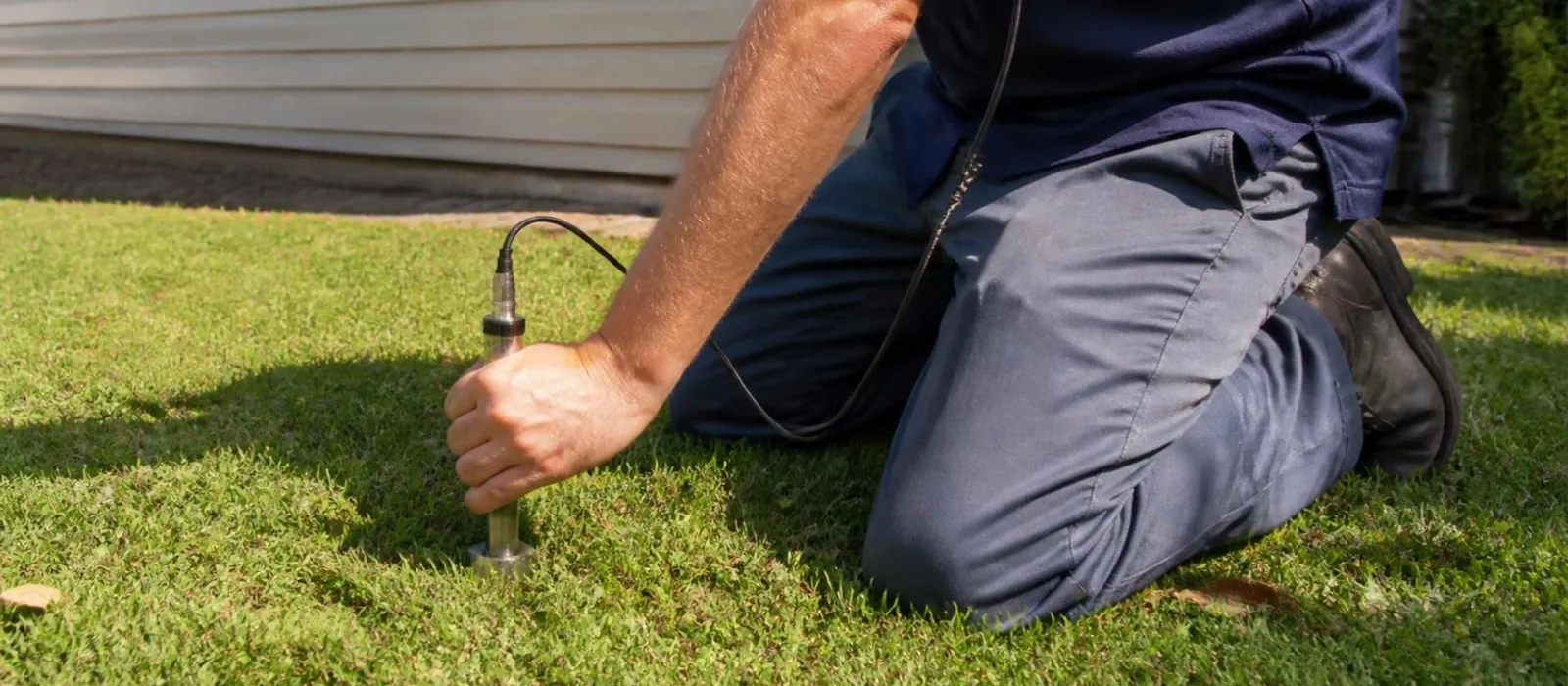
Once you know the leak is underground, the aim is to dig in one place, not five. Trained crews use acoustic listening gear to hear the leak noise through the ground and pipes, pressure tests to confirm which section loses water, and tracers to follow the route of the line.
That is the work behind locating a buried leak with listening and pressure equipment, and it can save a lot of lawn, driveway and patio.
After the spot is marked, the repair usually involves cutting out the failed section and splicing new pipe, or in worse cases replacing the whole run. We cover that under repairing or replacing the service line to the house. Expect the written price before digging starts.
The same method works whether the line serves a house in El Cajon or a lot in Spring Valley.
What not to do while you wait
Do not dig around the meter or tamper with the utility side of it. The meter and its valve belong to the water district, and a mistake can cause damage and a flood.
If water is surfacing and spreading, close the valve at your house, not the one at the meter, then keep people and pets off soft ground. Pooling near a foundation, driveway or sidewalk can undermine them quickly.
Mark the wet area with a cone or flag and take photos. It saves time and shows an insurer how the damage progressed.
What decides the price of finding and fixing a buried leak
No blog can honestly name a number. You get a written price before work starts. These are the factors.
Length and depth of the line
Long or deep runs take more time to trace and dig.
Surface above the pipe
Lawn is simpler than concrete, pavers or a driveway.
Pipe material
Copper, plastic and galvanized pipe each fail in their own way.
Number of failure points
One leak is a spot repair. Several can mean replacing the run.
Access and utilities
Crowded lines and tight spaces slow the work.
Policies often cover sudden and accidental leaks but often not gradual seepage or wear, and some exclude the cost of digging. Ask your insurer.
Want your real number? Call (619) 927-0312
Call (619) 927-0312Local timing: rain, meters and who to call
La Mesa gets about 13 inches of rain a year, and most of it falls November through March. In those months, wet soil after a storm can look like a leak. Run the meter test with every fixture off before you blame the pipe, and recheck any damp spot after several dry days.
From April through October rain is scarce, so a wet patch then deserves attention. Use those months to look for green strips and soft soil around the line.
Helix Water District serves La Mesa. If your meter test shows movement, call Helix about the meter and ask them to confirm the reading. Do not operate the utility's valve yourself. Use only the shutoff on your own side.
Sources used: Wikipedia La Mesa climate summary, Helix Water District 2025 Annual Water Quality Report. Plumbing work in California follows the California Plumbing Code, which is based on the Uniform Plumbing Code (UPC).
Quick answers
Turn off all water use and watch your meter. If it keeps moving, water is escaping somewhere. Then check the yard for wet ground in dry weather and listen for hissing near the meter.
No. A high bill can come from irrigation, a running toilet or a change in use. The meter test with everything off gives a clearer answer than the bill.
In general, the pipe on your side of the meter is the homeowner's responsibility, and the utility handles its own side. Call your water district to confirm where the line of responsibility sits.
It depends on the line length, access and how many sections lose water. We do not promise a time. We test in stages so we can name the likely section first.
No. The goal is to locate the leak first so the dig is small. Pinpointing first usually means less digging than guessing.
Yes. Most of La Mesa's roughly 13 inches of yearly rain falls from November through March, so saturated soil can mimic a leak. Run the meter test with all fixtures off and recheck wet spots after dry days.