
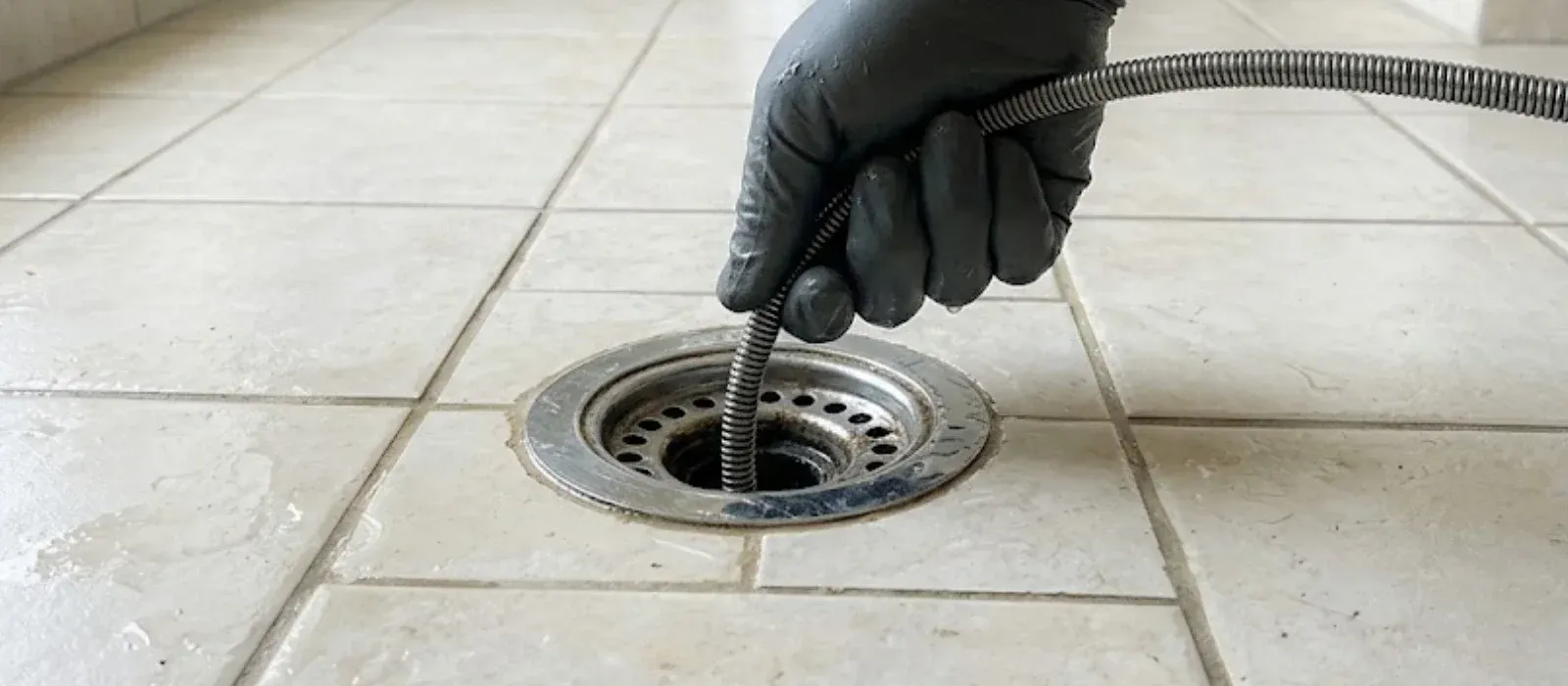
One clog or a main line problem?
A single clogged sink is a branch problem. The blockage sits between that fixture and the point where its pipe joins the larger line. When tubs, toilets, sinks and the washer all misbehave together, the blockage is past the point where those branches meet. That is the main line, the pipe that carries everything out of the house toward the street.
This matters because the fix is different. A branch clog often clears with a plunger or a short cable. A main line clog needs a longer cable or a jet, and sometimes a camera to see why the pipe stopped moving.
Branch line clog compared with main line clog
Branch line clog
- One fixture or one bathroom is slow.
- Other drains run fine.
- Plunger or short snake often works.
- Clog is usually hair, soap or food.
Main line clog
- Several fixtures slow or backed up.
- Gurgling in a toilet or tub after a drain runs.
- Water rises at the lowest drain.
- Roots, grease or a damaged pipe are common causes.
Signs the blockage is in the main sewer line
Lowest drain backs up first
Water from the washer or an upstairs shower shows up in a floor drain, shower or tub on the lowest level.
Toilet bubbles when another drain runs
Air pushed ahead of water has to escape. Bubbling in a toilet when you run the sink points to a blocked line.
Several fixtures slow together
If a kitchen sink, tub and toilet all slow within the same day, the shared pipe is the common point.
Smell of sewage near the cleanout or a drain
A blocked line can push sewer gas back into the house. Treat a strong smell as a reason to call.
Clogs that return after a quick fix
A plunger clears a drain for a day, then the water slows again. That is a sign the main line is not draining freely.
What to do the moment every drain is slow
Stop all water use
No flushing, no laundry, no dishwasher, no showers. Every gallon you send down adds to the backup.
Find your cleanout
Most homes have a capped pipe, often outside near the foundation or at the edge of the yard, where the main line leaves the house. Look for a round plastic or metal cap.
Look, do not open it blindly
If water stands in the cleanout or is near the top, the line is full. Opening it can release sewage. Wear gloves and eye protection, and have a bucket ready.
Protect floors and belongings
Lift rugs, towels and boxes away from low drains.
Call a plumber
Tell us which fixtures are affected, which is lowest, and whether you have found the cleanout. That helps us bring the right cable or jetter.
What to stop using, and what is safe
| Item | Status | Reason |
|---|---|---|
| Toilets | Stop | Adds sewage to a blocked line. |
| Washing machine | Stop | Moves a large volume fast. |
| Dishwasher | Stop | Same drain path as the kitchen. |
| Showers and tubs. | Stop | Fill the line and rise in the lowest drain. |
| Outdoor hose and sprinklers. | Safe | They do not use the sewer line. |
Use bottled water or a neighbor's facilities until the line is cleared. Chemical drain cleaners are a poor choice here. They can sit in a standing line and splash on whoever opens it later.
Why a main line clogs
Most main line stoppages come from tree roots entering through joints, grease and wipes that build up on rough pipe walls, or a broken or sagging pipe that holds water. Older clay or cast iron lines are more likely to have offset joints than newer plastic ones. Without a camera, you cannot tell which cause you have.
A plumber will usually start with a cable to open the line and then run a camera to see the pipe. If the clog returns often or the camera shows damage, the next step may be a main sewer line cleaning with a heavy cutter or jet or a repair.
When to call and what we bring
Call right away if sewage is coming up into a tub, shower or floor drain, if more than two fixtures are affected, or if the water level in the cleanout does not drop. We are open 24/7 for sewer emergencies. For the clog itself, our crews use drain cleaning with cables and jets and a camera to confirm the line is clear.
We serve homes in Spring Valley and El Cajon as well as La Mesa. Ask about written pricing at the start of the call. The real number is shared as a written price before work starts, and it depends on line length, access to the cleanout, the clog type and whether a camera inspection is needed.
Once the line is open, keep grease out of the kitchen drain, flush only toilet paper, and have a camera look at the pipe if the stoppage was your second in a year. Roots return unless the pipe is sealed or cut back on a schedule.
What a plumber does on a main line call
The visit starts with a look at the cleanout and the lowest drain. A cable machine opens the line, and the plumber notes what comes back: roots, grease, paper or sand. Then a camera follows the line to the street connection to check for cracks, sags and offset joints.
You get a plain report on what was found and whether the line needs cleaning on a schedule or repair. Ask to see the camera footage. If the pipe is damaged, you should see where, at what depth, and why cleaning alone will not hold.
Safety when sewage backs up
Sewage carries bacteria. Keep children and pets out of any wet area, wear rubber gloves, and wash your hands well afterward. Do not touch electrical outlets or cords near standing water. Turn off power to a flooded room only if you can reach the panel without stepping in water.
Soaked drywall, carpet and padding should be pulled out and dried quickly. Take photos for your insurance claim before you clean. Homeowner policies often cover sudden and accidental events but often not gradual damage, so ask your insurer.
Backups during rainy months in La Mesa
La Mesa gets about 13 inches of rain a year, and most of it falls from November through March. If a backup happens during or right after a storm, check your cleanout first. If water stands in it or if neighbors also report slow drains, call the City of La Mesa at 619-463-6611 to ask whether the street main could be affected.
Ask the City which part of the sewer line is public and which is yours. That tells you who has to clear the blockage, and it keeps you from paying for work on the wrong side of the property line.
Sources used: City of La Mesa main line, La Mesa climate data, general plumbing practice. Plumbing work in California follows the California Plumbing Code, which is based on the Uniform Plumbing Code (UPC).
Quick answers
All fixtures share the main sewer line. When it is blocked, water cannot leave the house, so every drain slows or backs up. A single clog affects only one branch.
A short plunger or a hand snake rarely reaches far enough. The blockage may be fifty or more feet away. A plumber's cable or jet and a camera are better tools.
Yes, if sewage is rising or entering the house. Stop using water, protect floors and call. We have a 24/7 emergency line.
Look for a capped pipe, usually a few inches wide, near the foundation or where the line leaves the house. Some homes have one in the yard or garage. Ask your plumber if you cannot find it.
Check your cleanout first, then call us at (619) 927-0312. If water stands in it or neighbors also see slow drains, ask whoever manages the sewer main on your street whether it is involved. We can clear your private line either way.